After a pretty unexciting summer movie season, it would have been nice to come home to some exciting new shows this fall. Alas, so far some aren’t too promising despite a strong pedigree, and others are downright terrible. Good thing there are still a number of returning shows to keep us satisfied (I’ll get to those later.)
 Young Sheldon
I don’t quite understand why this show got made. Compared to its parent-series, The Big Bang Theory, this prequel show about the childhood of its main character, Sheldon Cooper, is a lot more ordinary. From The Wonder Years, to Malcolm in the Middle, to Everybody Hates Chris, to Fresh Off the Boat, there are so many shows as flashbacks to the story of a boy growing up in a normal-yet-quirky family. The narration from older/future Sheldon (still voiced by Jim Parsons) reminds us that he’ll one day be a super-nerd, but for now, he’s just a regular dweeby kid who’s been bumped ahead a few grades. Sheldon doesn’t know how to behave around normal people even as an adult on Big Bang Theory, so obviously he’s hopeless as a child. Are we just going to see him get bullied and ostracized for the entire series of Young Sheldon? The first episode showed us Sheldon’s family, but the only one who seemed interesting was the younger version of Sheldon’s mom. There were some character moments between Sheldon and his father, but considering that we know he’s going to leave his family, every moment of connection between father and son is bittersweet. Even with that potential for drama, this show is not a dramedy. It’s pure sitcom, and (despite its already having received a full season order) so far it doesn’t seem like a very interesting one.
 The Good Doctor
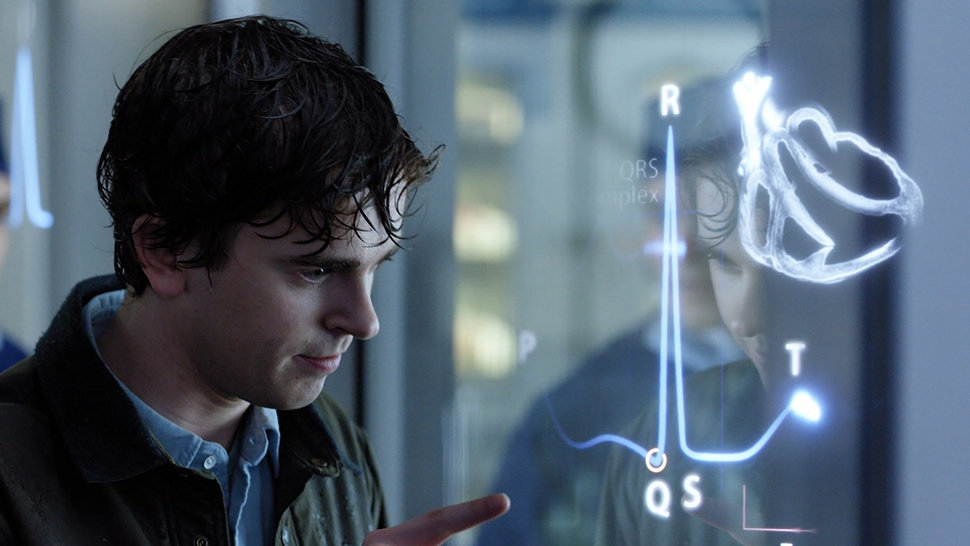
This show kind of echoes some of the themes of Young Sheldon, but it’s about Freddie Highmore (last seen playing pre-psycho Norman on Bates Motel) as a young surgeon who’s also an autistic savant. Like Sheldon, Shaun Murphy knows way too much stuff (plus he has a super-human ability to diagnose a suffering person’s medical ailments), and people just don’t understand him. In the first episode he tries to save a young boy in the airport, but gets tackled by security when he grabs a knife from the confiscated-articles box. No one (except the audience) sees his genius. As much as I enjoy Highmore in the role, and he makes a good addition to the long line of medical miracle-workers celebrated on-screen, I don’t really know how this show is going to go. His character seems a bit like an alien who floats through the hospital intervening with his super-human medical abilities. Hopefully he will develop genuine relationships with his colleagues and become a more organic part of the hospital, but that has not happened yet.
 The Orville
The Seth MacFarlane sci-fi show came into the mix with a confusing premise. It is meant to be a space-ship series with a positive, upbeat outlook, similar to the many Star Trek shows that have come before (especially Star Trek: The Next Generation). What was not clear was whether this show would be a parody of Star Trek, or a copy. The show got an early start, so now that we’ve seen four episodes, we know it’s the latter. While the involvement of MacFarlane (creator of Family Guy) means that there is bound to be some humour, it is clear that the show is meant to be a replica of Star Trek — from the uniforms, to the ships, to the crew, even the music — all make you feel like you’re watching Trek. Unfortunately two things make The Orville a pale copy: the writing is incredibly weak; and the humour is limp. If the show intended to follow in Trek’s footsteps, its writers needed to develop a much better understanding of sci-fi and what has gone on before. Most of the episodes so far have been variations on Trek (and even Stargate) stories, but not taking itself seriously enough to fully develop the ideas and themes of each. The worst example is an episode where a crew member from a single-sex race faces a storm of controversy when he tries to follow his culture by reassigning his female child to conform with his race’s male gender. Many of the characters rant about how barbaric this surgery is on an infant, and how women are just as good as men (and one scene even uses the stupidity of the ship’s male pilot as proof that males are not superior). The arguments are weak and poorly thought-out both as political discourse and as science fictional allegory. Similarly, the jokes also show ridiculous lack of thought. Almost every joke shows that MacFarlane’s character (Captain Ed Mercer) is really just a displaced 21st century guy in a show set 400 years in the future. No one would laugh at those comments: not then, and not even now. It’s as if a character on Big Bang Theory was making jokes that a Shakespearean audience would find funny. The humour is so anachronistic that it seems pasted on. This show is clearly MacFarlane’s vanity project and I don’t see how it can possibly survive, especially when compared to…
 Star Trek: Discovery
Finally, after over a decade, Star Trek returns to the small screen, and not a moment too soon. Despite the fact that this series is set in a time before the original series (and despite the fact that I am tired of Trek creators going back to that period), everything looks and feels very modern and futuristic. The production values of the two-part opening episode is movie-quality stuff (complete with a few unwanted Abrams-style lens flares). The story features Michael Burnham, a first officer rather than a captain, as she tries to save her crew and captain from an encounter with the Klingons (remember, in this time period Klingons are enemies to the Federation). Rather than the episodic exploratory encounters of Star Trek and The Next Generation, so far this new series leans more towards action and the power politics of space (similar to Deep Space Nine, or even The Expanse). The premiere episode is very much like a movie and sets up Burnham’s story, rather than how episodes of the show will go. It’s definitely less traditional than previous Trek, but it could be a really exciting new direction for the franchise. I’m a little disappointed in how they’ve set up the Klingons again as a kind of enemy-race (It always seems unrealistic that an entire space-faring species would have the same motives and agendas). I hope things will become more nuanced and complex as the series progresses. Nevertheless, even out the gate, Discovery flies rings around The Orville.
 Marvel’s The Inhumans
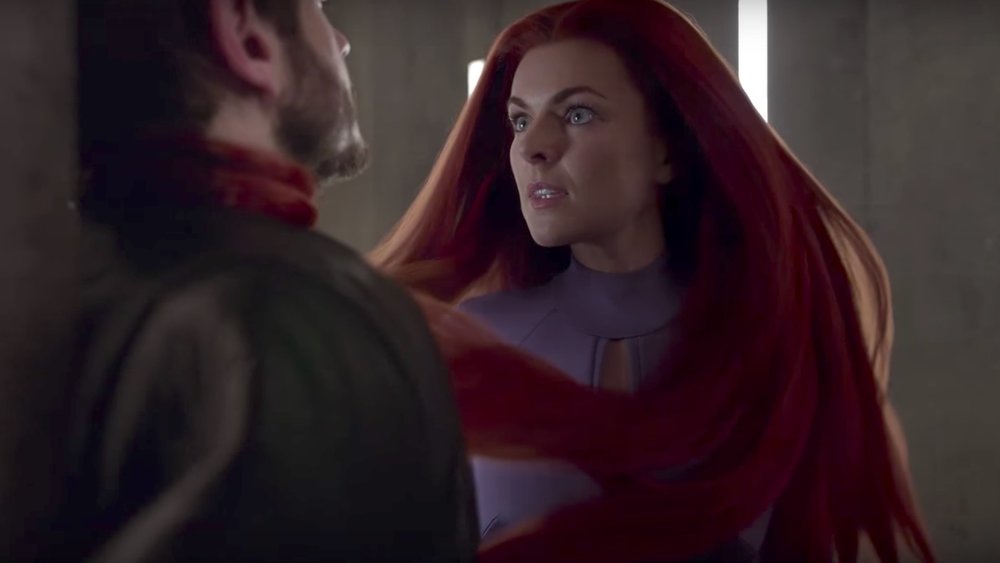
Oh, the (in)humanity! This is perhaps one of the most hyped sci-fi shows of the fall. Many people are already familiar with the Inhumans from recent comic book events and series featuring these characters. As well, this show’s pilot episodes were shot in IMAX format so they could premiere on the big big screen before its tv debut. I’m not sure why it seemed that Marvel Entertainment spent so little effort (and obviously not enough money) on the show, but it definitely shows. From inferior scripts, to second-rate acting, to ridiculous costumes and terrible CGI effects, this show has so much going wrong with it that it’s doomed to failure. The story of a race of super-humans living on the moon who are given fabulous mutations as they reach adolescence has a lot of sci-fi potential. Unfortunately this show does not yet live up to any of it. Black Bolt and Medusa are the king and queen of the Inhumans and when Black Bolt’s brother Maximus stages a coup (with only about a dozen soldiers), the rest of the royal family escape to Hawaii, where they are scattered as fishes out of water and need to make their way to each other. Much has already been written about the poor CGI effects, most notable being Medusa’s prehensile hair, which in comic books is huge and strong like gigantic tentacles that she uses to grip and fight enemies, but on the show they’re poorly animated strands that she wraps around Maximus’s throat or pushes him up against the wall. What makes it look worse is that her hair is so short that it everything she does with her hair could just as easily be done with her hands. Then as part of the coup they even shave her hair off (thus saving the CGI dollars)! There’s also a giant bulldog named Lockjaw, which is the royal family pet, that can teleport anyone anywhere. When he does, the CGI looks like he’s being sucked off the edge of the screen, or like when I minimize the apps on my Mac. However, all the poor production values would be liveable if the script and acting were good. Unfortunately they are not.
 Me, Myself and I
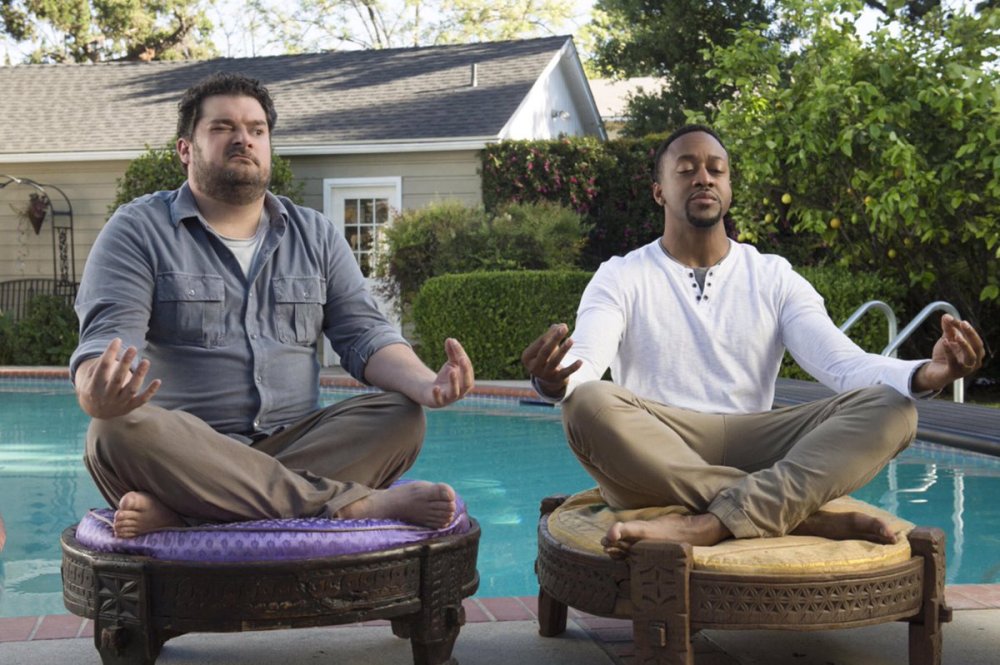
Finally, I had not originally planned to watch this show, but the premise caught my eye. The triple title describes the format where we get to watch the story of the main character, inventor Alex Riley, in three periods of life: childhood, middle age, and retirement. It’s a dramedy starring SNL comedian Bobby Moynihan as the middle-aged Riley, John Laroquette as the elderly version, and newcomer Jack Dylan Grazer as the kid version. The formula seems to bring the three story parts together along a loose thematic thread, but even without that connection, the stories are nice little vignettes. So far, I can see how the show will be charming and uplifting. It’s like a lighter version of This Is Us, without the big-three-fold drama and the looming death of the father. If they keep drawing connections between the three time periods, things may start to seem too unnaturally parallel, but this is still a potentially enjoyable show until then.
That’s all the new shows that I’ve seen this season so far, but sadly there are only a handful more to come. This year the networks have concentrated their premieres all within a short period (which is how I like it), but that means I don’t have time to cover them all at once. I’ll be back tomorrow with Returning Shows, and then come back again to close out the remaining premieres that follow. Later!
 Alvin's Adventures in Pop Culture