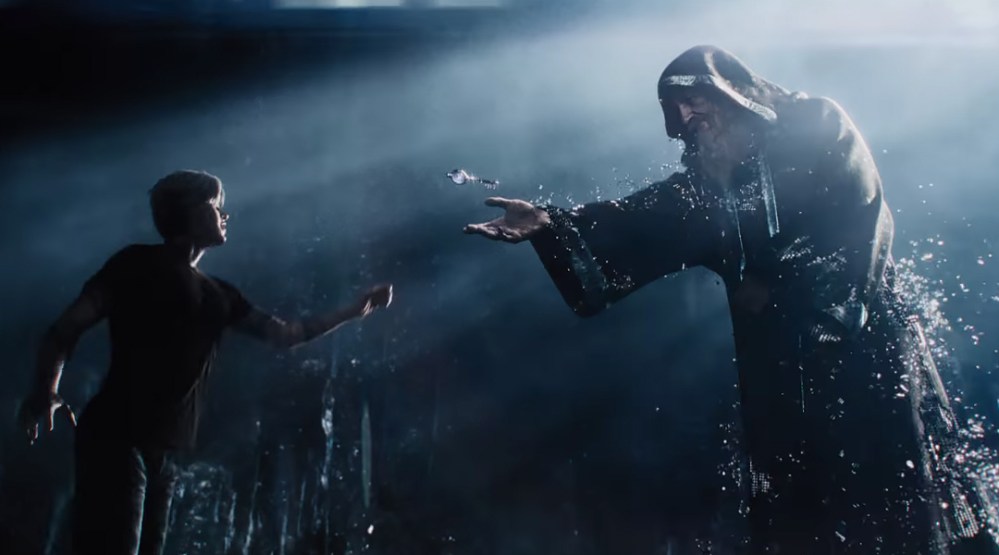
 The paradox about watching the Ready Player One movie is that I would probably have enjoyed it a lot more if I hadn’t read the book, by Ernest Cline, a few years ago (and then again last month to get psyched for the movie). I had been very much anticipating this movie because the book is pretty visual and movie-ready. Since I loved the book so much, I couldn’t wait to see it adapted to screen (especially with Steven Spielberg at the helm). Unfortunately, though they kept the essentials of the story about the not-too-distant future, when times are tough, but the world escapes by plugging into a massive, virtual-reality universe known as the Oasis, a lot of other things were changed. The hero of this story is one of many “gunters” (short for “egg hunters”) looking for clues to find a set of mysterious keys and an “Easter egg” left behind by the Oasis’s creator after his death. Whoever finds the egg will inherit ownership of the Oasis (along with the multi-billion-dollar company behind it). It’s an exciting premise and sets up a pretty thrilling story, filled with clues and twists, but the other big element of this story is that it’s filled to brimming with pop-culture references (especially from the 80s). Being someone who grew up in that great decade, along with being a nerd who loves nerdy things, this story was perfect for me. Unfortunately, when I got to the movie, much of what I’d loved about the book had been altered. The changes were big and small, but they added up to a lot of distraction for me and really hindered my enjoyment of what appeared to be a pretty well made movie.
The movie spends a significant amount of time in the virtual world, so a lot of the scenes are computer generated. Ironically, since the Oasis was meant to be such a great simulation that everything seemed 100% real, I wonder if scenes set in the Oasis were actually pure CGI or if some was actually filmed in reality. The main character, Wade Watts, has an online alter-ego named Parzival and the online characters were all clearly computer-generated. However, the animation is very good (much like the animation in the movie Avatar) where characters that have exaggerated features (in this case their eyes seem a bit too large) still feel real. One of the alterations that bothered me is that there was a lot more time spent in the real world (probably because they’d hired real actors and didn’t want to waste them voicing animation) than they did in the book (at least compared to how much time they spent within the Oasis). That diminished one of the themes of the book: that virtual reality was many times more compelling to these characters than the real world. It wasn’t just teenagers hooked on cartoon violence who were into it. This digital universe was not only an escape, it was a place where people to do anything they imagined — they lived there. Because the movie spent so much time outside, I don’t think we viewers ever felt the kind of engagement or absorption into the Oasis that the book could create.
Parzival and his friends are surprisingly successful at solving the riddles within the egg hunt, and they soon catch the attention of the villains of the story: Nolan Sorrento and the forces of IOI — the evil corporation that will do anything to gain control of the Oasis. Though the way the good guys end up defeating Sorrento is pretty complicated in the book (so it’s understandable that they need to modify it for the movie), there were some unbelievably convenient things that occur which really made it feel obvious that they were trying to abridge a more complete story. I makes me think that the best audience for this movie is actually someone who enjoyed the book many years ago and has not re-read it since. That person would know enough to understand the pieces that are faithfully brought into the movie (albeit without adequate explanation or context), and yet they’ve forgotten enough of the book not to notice all the ways that the story’s been changed.
The other characters with Watts, who are nick-named the High Five because they got the top spots on the leaderboard, are good sidekicks and form your typically Spielbergian group of misfits. They are brave and loyal and easily risk everything to help Watts bring down the bad guy. However, we aren’t given much time to get to know them, and another big movie change is that very little is made of their true identities when they are revealed. In the book, all of these friendships are formed within the Oasis and that is significant. The way the virtual world allows a person to reinvent themselves, regardless of how they are in the real world, is a strong theme and makes each of the revelations of their true identities both shocking and poignant. While it may be a testament to tolerance that no one balks at their online friends’ true selves, this movie shortcut takes away another emotional strength of the book.
Finally, the biggest change from book to movie is the way pop culture is referenced. Spielberg and crew have done an excellent job at baiting and switching. By replacing the many 80s, japanimation, and fantasy role-playing allusions in the book with heaps of contemporary characters (taken from modern video games) and tropes (such as zombie apocalypse), we still feel like we’re watching an Ernest-Cline-worthy story, overflowing with pop-culture, but it’s not the same. Viewers who identify with the 80s, or fantasy role-playing may not feel as connected to those other references. I could not really get past these distractions (also because they were everywhere in the movie).
Unfortunately, what could have been a perfectly decent sci-fi adventure movie, if they hadn’t based it on the Ready Player One novel, turned out to be a mediocre adaptation. As I left the theatre, I remembered feeling the same lack of satisfaction about The Matrix when I first saw it. Maybe there’s something about a movie set in a virtual world that I can’t fully enjoy on first viewing. Whatever the problem, I can’t quite recommend this movie (especially if you’ve read and enjoyed the book), but I’ll still give it a 3.5 out of 5.
 Alvin's Adventures in Pop Culture