Unfortunately I’m not making it through a lot of movies, but here’s the second batch of movies that I’ve watched as part of my summer catch-up exercise (including recent genre hits, and Studio Ghibli rewatch).
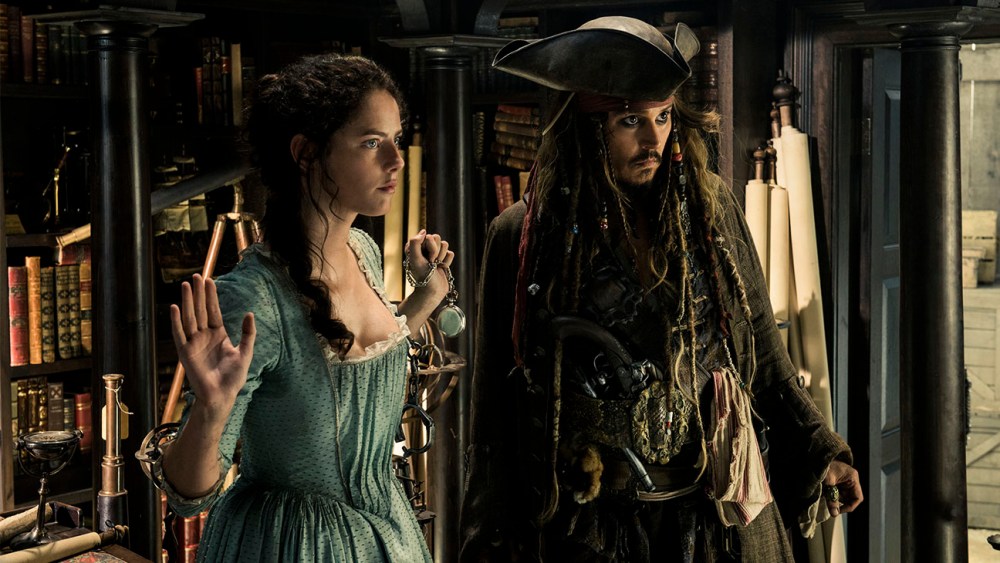
Pirates of the Caribbean: Dead Men Tell No Tales
Going into this one I had no illusions that it was going to be anything other than a formulaic Pirates film where some quest incidentally involves Captain Jack Sparrow (again played by Johnny Depp), and also that some undead enemy will be seeking to destroy Jack Sparrow and everyone he’s with. This time their quest was for Neptune’s Trident (another magical object of sea legend — this one can counter all sea curses like the one poor Will Turner, from the previous movies, is suffering under). Jack gets dragged into the story as Turner’s son Henry (played by Brenton Thwaites) is the one invoking the quest. Unfortunately, Jack is being hunted by Spanish Captain Salazar (played by Javier Bardem) who, as a ghost, seeks to destroy all pirate ships. The formula does kind of work, and the special effects and action sequences are pretty well done and fun. I do enjoy all the seafarer mythology (even though it’s clearly made up non-historical gibberish), it adds a nice fantastical sheen to these pirate adventures. Depp’s character is becoming more and more secondary, and his drunken bungling seems more annoying than charming or comedic. I wish they could just continue the franchise without him and without the need to bend the plot to include him. If you enjoyed the other films in this series, this one ranks not the worst — more middling — so you should like it. If you expect anything more gritty or imaginative, you’ll be disappointed. However, they do part the seas, so there’s that. (3.5 out of 5)
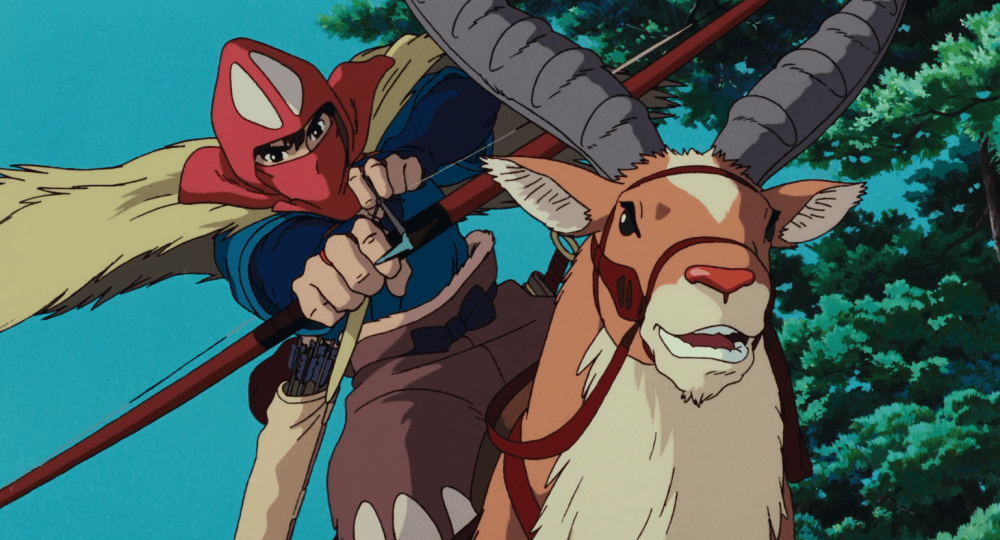 Princess Mononoke
The story of a young villager and a feral princess seems like something unexpected. This movie contains a strong environmental message (about industrialization killing the forests) but also contains a strong mythical element. When a demon boar (king of the boars) contaminates a young man’s arm, he needs to leave his village to seek both a cure and the truth. Along the way through the forests and country, he comes across a large ironworks which is causing pollution and contamination that turns animal deities into maggoty demons. In this world, the struggle against nature has a magical element to it, and the manager of the ironworks, Lady Eboshi (voiced by Minnie Driver) wants to kill the god of the forest in order to gain the upper-hand. As the young man, named Ashitaka, struggles to pick a side, he also meets a young girl named San, who was literally raised by wolves and fights to protect nature from humans. For a movie made 20 years ago, the animation is top notch. The scenery is stunning and the action sequences, depicting war between animals and humans, gets to really pop. The action scenes are rapid and flow very well. Some of the plot and story was unclear, but the idea that forests are a mystical environment, home to various godlike creatures, was created freshly and magnificently imagined. (4 out of 5)
 Baby Driver
What a good movie! While I’ve seen many movies about criminal gangs and crews running jobs, I think this movie is a pretty fresh take. It focuses on the getaway driver, named Baby (played by Ansel Engort) and how he tries to take care of the people he loves, and wants to get out of the crime business. Unfortunately, it’s never that easy to break free from a criminal life, and Baby needs to handle things as a job goes south and circumstances (and violence) escalate. While the plot of the movie is pretty solid, it’s the combination of style and heart that makes Baby Driver a hit. One of my favourite directorial touches is when Baby takes a walk to his favourite diner. As he saunters along to music in his earbuds, words displayed in the background (mostly on graffiti) which echoes lyrics of the song in perfect timing. Music is clearly a large part of this movie, and it’s a nice touch which brings a lot of style to that scene and many others. Also, it tips the viewers off to the tone of this movie, which walks the line between comedic and dark. As you would expect from a movie like this one, there are a few chase scenes (in car and on foot) and they are really well done, especially the car chase after the first heist. Though there are a lot of flashy elements to this movie, its strength is its character moments. Baby seems at first like an uncaring youth, but we learn that he is struggling with grief and tragedy in his life, and that he is fiercely devoted to the few people in his life who get past his introverted personality. I think this movie is really well paced, well balanced, and well made. It stands way out in a fairly saturated genre. (4.5 out of 5)
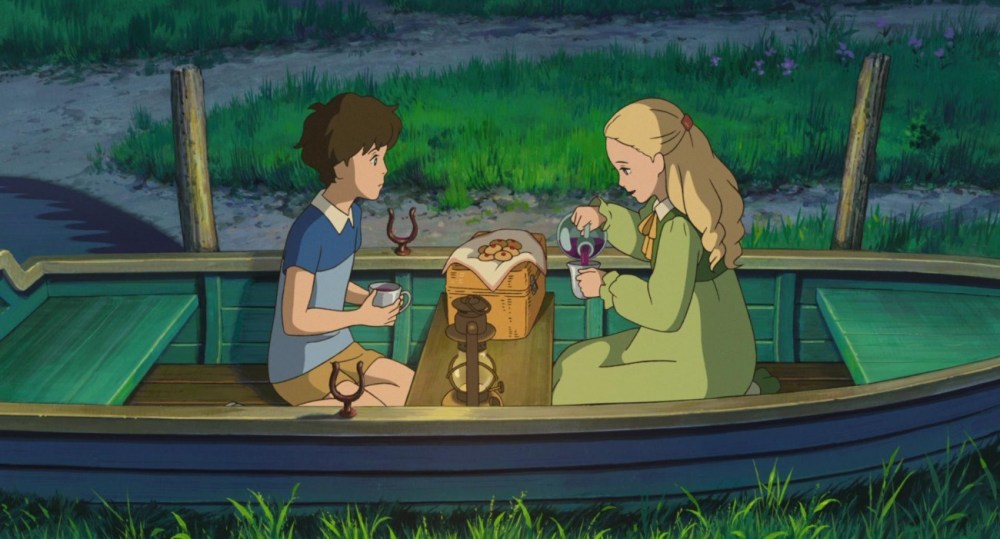 When Marnie Was There
This movie was new to me. Released only three years ago, it is less of a classic than the other Studio Ghibli movies I’ve rewatched so far. It’s also the first film produced after the retirement of the studio’s two masters: Hayao Miyazaki and Isao Takahata. Based on a British children’s novel of the same name, it’s the story of an introverted 12-year old girl named Anna, who lives in Sapporo, Japan with her foster parents. To help Anna with her asthma, they send her to spend the summer with some relatives in a small seaside town. As she explores the town, Anna is intrigued by an old mansion nearby. When she encounters a young girl named Marnie who apparently lives there, they quickly form a strong emotional bond. Marnie’s presence in the abandoned mansion is a bit of a mystery. There’s something magical and dreamy about Anna’s encounters with Marnie and it’s unclear whether or not Anna is imagining everything. The film is pretty subtle about all of that, mostly focusing on Anna’s experiences and her visits with Marnie. The implications of Anna’s affection for Marnie are vague as well. Their love for each other seems stronger than mere friendship. By the end of the movie, a lot is revealed about the connection between Anna and Marnie, and their shared past. I enjoyed this movie well enough, and the visuals are lovely, idyllic and quaint (even made me want to visit a small seaside town). Nevertheless, I found the story and meaning a bit confusing. I guess it’s more realistic that a young girl’s coping with moodiness and tragic memories would be complicated, and it’s nice that a movie (even a kids movie) doesn’t over-simplify that. Definitely not your typical Studio Ghibli movie. (4 out of 5)
 Alvin's Adventures in Pop Culture