One of the joys of the TV off-season is the opportunity to catch up on movies. Recently, I spent five evenings binge-watching the works of new Japanese master animator, Mamoru Hosoda. When it comes to Japanese animated films, most people think of Studio Ghibli, founded by master animator Hayao Miyazaki. Their kinds of movies are beautiful, imaginative, lyrical, touching, fun, magical, and character-driven. Hosoda worked briefly for Studio Ghibli, originally commissioned to direct Howl’s Moving Castle for that studio, but clashing over wanting to do the film his way rather than emulating Miyazaki’s style. He left Studio Ghibli, and eventually formed his own studio, where he works to this day.
Hosoda’s five main works are: The Girl Who Leapt Through Time, Summer Wars, Wolf Children, The Boy and the Beast, and Mirai of the Future. While his style echoes some aspects of Studio Ghibli (including beautiful visuals, a strong character focus, and a delicate touch of fantasy), there is also a fresh approach that distinguishes his films from Miyazaki’s. Even among Hosoda’s five films, there is a wide variation in theme and story. Some have more of a sci-fi flavour, while others express a strong sense of magical realism. The range makes it hard to pin Hosoda down, but it is also exciting to see what kinds of stories he will bring to the screen next.
The Girl Who Leapt Through Time (2006)
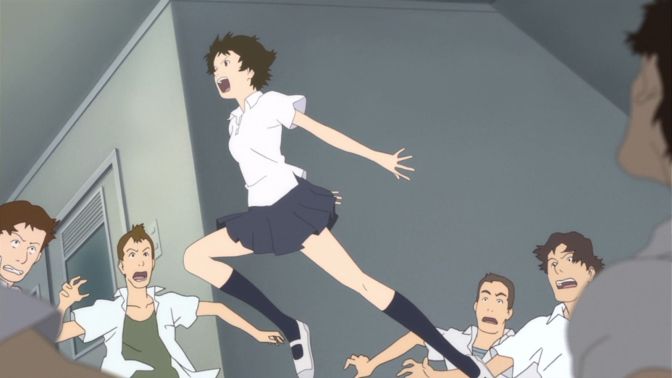
Sporting a very “by the book” title, there is not much imagination needed to figure out what this movie is about. Makoto is a school girl with a relatively normal life, enjoying baseball after class with friends, and occasionally squabbling with her sister over a cup of pudding, but after something mysterious happens to her one day, she learns that she’s able to “time-leap” and go back to the past and alter what happened to her. As she practices her newfound gift, she starts fixing things in her life — the kinds of things you’d expect a teenager to fix if they could change the past — like getting better grades, avoiding accidents in the schoolyard, helping her friends get together with the right girlfriends, and making sure that her sister doesn’t get her pudding. However, as her alterations to events continue to grow, she is haunted by her aunt’s question about who ends up being hurt by these changes. Makoto starts to face the implications of what she’s doing. Of course, the sci-fi elements start to amp up once she learns what gave her this ability. A lot of the ideas typical of time-travel stories are included in this movie, but Hosoda takes a much lighter hand with it. No one debates trying to kill baby Hitler or even win the lottery, but the associated themes of regret, destiny, and free-will are all nicely handled within the relatively mundane life of an ordinary Japanese school girl … who leaps through time. (4 out of 5)
Summer Wars (2009)
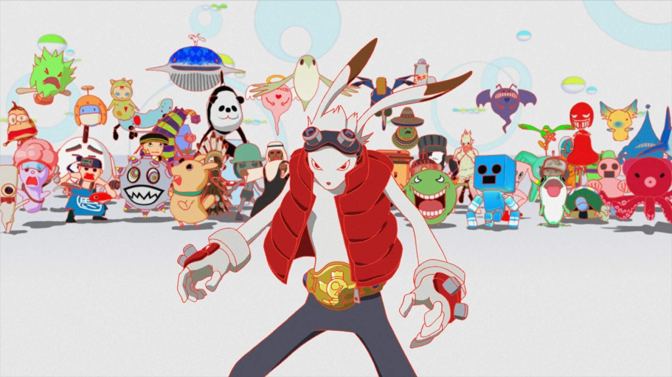
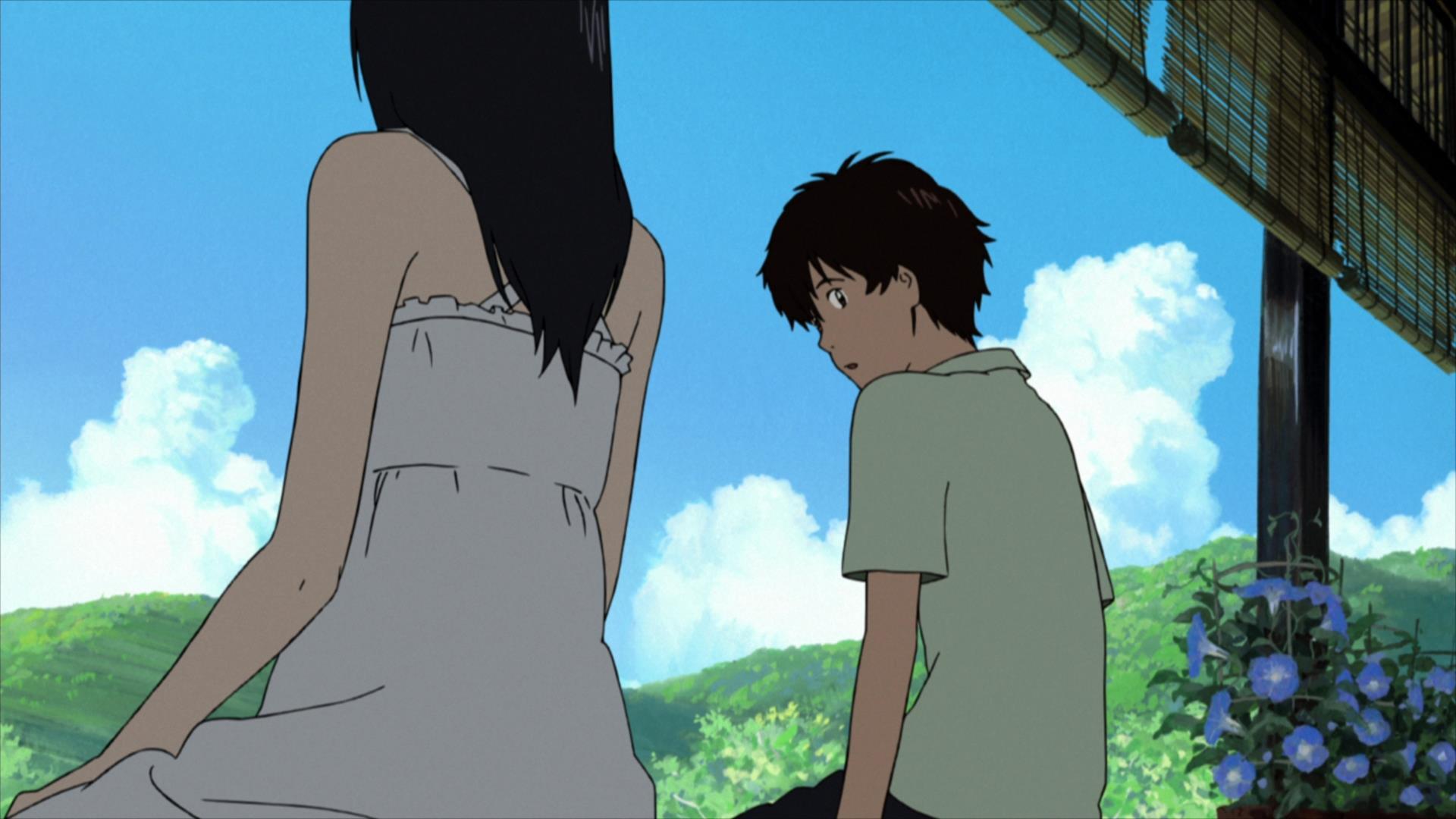
This movie starts in a place that provides the viewer absolutely no chance of guessing where it’s going to end. Kenji, a genius math-nerd is hired by his crush-worthy classmate Natsuki to accompany her to her grandmother’s 90th birthday and pretend to be her boyfriend. So, half the movie has a rom-com (think Crazy Rich Asians) feel, where we are introduced to the colourful characters in Natsuki’s large family. This first part of the movie is charming and quaint, but in the background (that comes quickly to the foreground) is a major catastrophe within OZ, the global virtual environment where the world spends much of its available time. Kenji and his friend moonlight as code support for OZ and when a nasty piece of AI starts to cause havoc to OZ, the movie also escalates quickly into a sci-fi action suspense story. One of the unique qualities of Hosoda’s films is their blend of simple “2D” character animation with visually amazing backdrops which definitely appear to be computer-assisted and provide a very three-dimensional feel. The animation of OZ, with its many interesting avatars and virtual environment (and its over-the-top physics) make it an impressive sight (not site). I won’t spoil the connection between Natsuki’s family and the crisis in OZ, but the two halves of the movie work together pretty well (with a pinch of suspended-disbelief) and make Summer Wars an enjoyably original, and engaging, story. (4.5 out of 5)
Wolf Children (2012)
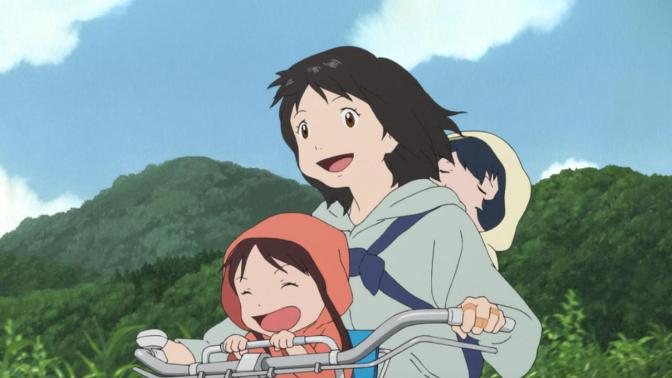
After the first two, you might be tempted to think you can loosely surmise the common qualities of a Hosoda film, but Wolf Children works hard to throw any pattern out the window. After young college student Hana falls in love with a mysterious classmate, she learns that he is the last of a kind who can switch their form between human and wolf. Eventually the couple have two children, but the werewolf husband dies in an accident and Hana is left to care for her two hybrid children alone. To avoid prying eyes who might seek to harm her children out of fear and ignorance, Hana moves her family to a remote rural town where she tries to make a new life for herself and carefully raise her children in a new community. This film feels a bit like a modern take on a Grimm’s fairy tale, but it is also very down-to-earth (despite the fantastical premise) and mostly tries to deal with topics like single-parenthood and raising kids. The wolf-nature of the children is a simple metaphor for any number of non-conforming qualities that lead to prejudice and rejection by a community, such as physical anomalies or medical conditions, social differences, and most-obviously ethnicity. What’s great about how it’s handled in the film is that there’s no attempt to explain the condition. The children are half wolf and that’s that. Therefore, it makes sense that they should struggle with hiding their nature, with choosing to pass as fully-human, and with learning more about their wolf heritage as they grow up. The resulting story is a moving one, and it’s easy to get absorbed into the lives of these characters — plus, the kids are adorable as wolf-pups. (4 out of 5)
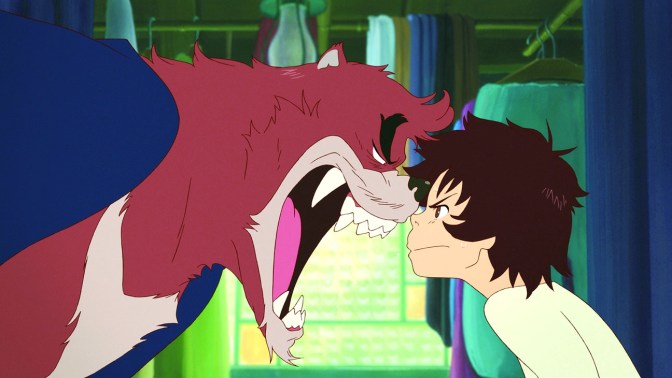
The Boy and the Beast (2015)
You could argue that this film is the most like a Studio Ghibli film out of the five. However, it is also the most unique of them as well (though it also has many of the elements of a classic anime). After a young boy named Ren loses his mother (and is essentially abandoned by his father), he runs away and follows a couple of mysterious figures exiting from modern Japan into an alternate world populated by humanoid animals (much like a Shogun-era version of Disney’s Zootopia). This fantastic world actually seems to follow concepts found in traditional Asian and Taoist folklore (such as the classic Journey to the West), where intelligent, talking animals practice meditation and martial arts as a way to eventually transcend their physical forms and become reincarnated as gods. (I know. This is absolutely nothing like the other Hosoda films either, right?) Anyway, Ren is reluctantly adopted by a gruff, insensitive bear named Kumatetsu as his disciple, who renames the boy Kyuta. Kumatetsu teaches Kyuta to fight, but also learns a lot from Kyuta as well. You might think that the narrative will be relatively straightforward, since both gruff characters eventually form a strong bond of love and loyalty, but there is so much more. Kumatetsu has a popular rival for becoming lord of the Beast Kingdom (after the current lord, a wise rabbit, transcends into godhood). Adored by the masses, powerful, and skilled, Iozen (a talking boar) is a much better candidate than the rough and disrespected Kumatetsu. Eventually the story goes in all kind of directions, including Kyuta returning to the modern human world, finding his father, and befriending a schoolgirl — and a spirit whale is also involved. Though this movie was top of the Japanese box office (knocking out Avengers: Age of Ultron at the time), critics had mixed reviews. I loved it, even though it follows more of the typical anime cues and elements that perplex me sometimes. The characters were really interesting and the animation expresses that trademark Hosoda blend of relatively simple figures with incredible action- and visual-effects artistry. This is my favourite movie of the bunch, and was the Hosoda film that instigated this journey of discovery (4.5 out of 5)
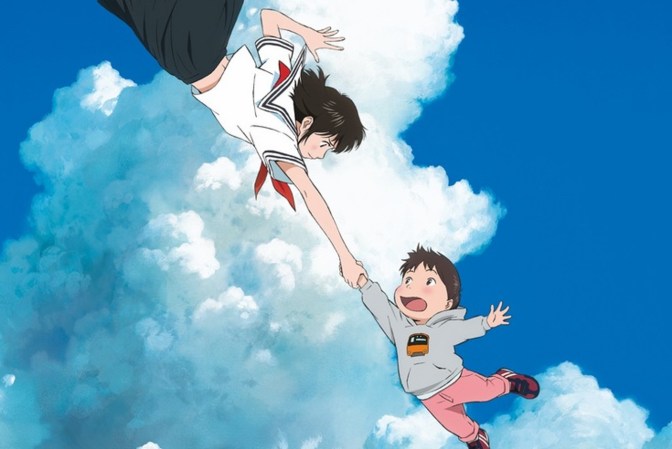
Mirai (of the Future) (2018)
This film was nominated for both a Golden Globe and an Oscar. Of the five films, it has the simplest plot, and is most representative of “magical realism” in anime. The story is about Kun, a four-year-old boy, who is struggling to accept newborn sister Mirai into his life. Helping him to learn is a magical tree in their home courtyard, which somehow manifests members of Kun’s family at different stages of their lives and different periods of time — most notably, a teenage version of Mirai from the future. Each of these dream-like encounters seems to occur after a tantrum, and intends to teach Kun something about his family. Each one is a mini adventure of its own. The animation for these fantasy sequences is a step up and even covers a range of visual styles. While the animation is obviously computer-generated or computer-assisted, it still has a very naturalistic feel and artistic flare throughout. This overall story is pretty modest, but also contains many wondrous flights of fancy. As much as I was annoyed at Kun for his selfishness and immaturity, it was great to take this journey with him into his own heritage. Even though this is the most recent Hosoda film, it’s also probably the best one to start with. It requires the least effort of interpretation so it’s an easy way to “ease in” to the oeuvre. (4 out of 5)
Having enjoyed every one of his films, Mamoru Hosoda has quickly become one of my favourite writer-directors. Unlike the semi-retired Hayao Miyazaki, at the age of 51, I think Hosoda still has a long, bright career ahead of him. I hope many others will discover his work and enjoy it; and I can’t wait to see what he creates next.
 Alvin's Adventures in Pop Culture