Growing up with a lot of Disney, I’ve always loved animated movies. So even as a middle-aged adult, I enjoy catching up with a lot of these movies. These days there are a steady flow of them coming to theatres and streaming channels, and their visual quality and production values seem quite high. The only question remaining is whether they tell memorable, entertaining, and meaningful stories.
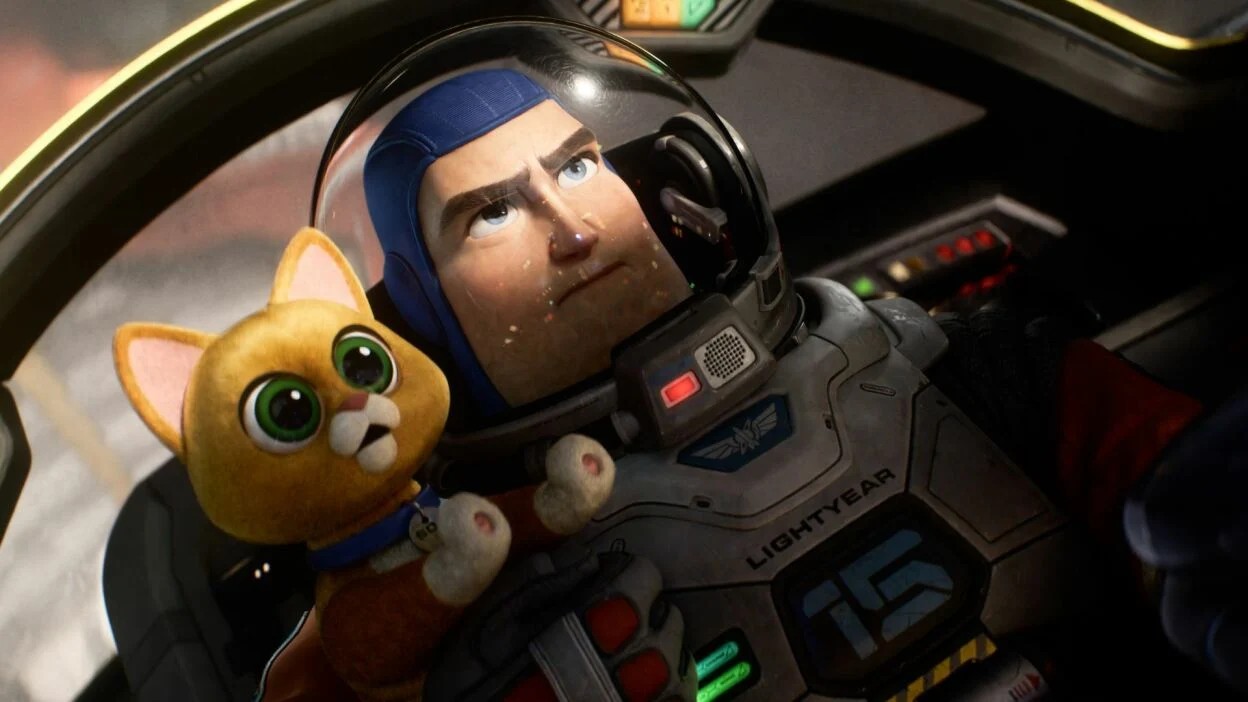
Lightyear
After watching Lightyear on Disney+ (which I had skipped in the theatre due to mediocre reviews), I didn’t actually dislike the movie (though many viewers did). Granted, the story is a bit weak overall, but the animation is really good — all the spaceships, costumes, and character details are vivid and flawless. It’s a bit unfortunate that we didn’t get the epic space adventure that it could have been. Instead, Pixar unsurprisingly chose to tell a more modest story about one man (obviously Buzz, the titular Space Ranger), his devotion to his mission, and his struggle to deal with his own failings. It’s interesting how the filmmakers felt the need to introduce this movie as the original film from which the toys in Toy Story of Buzz and his nemesis Zurg were made. On one hand, this isn’t really the kind of movie that spawns “action figures”. On the other hand, there was also a previous cartoon TV series from Disney called “Buzz Lightyear of Star Command” full of spacey adventures and colourful aliens that makes a much better inspiration for toys (but oddly that show seems to have been swept under the rug). Regardless, this movie follows Buzz Lightyear (now voiced by Marvel superstar Chris Evans, rather than Tim Allen, who voiced Buzz in the Toy Story movies) after his error results in a colony ship full of humans being stranded on a strange planet. Without a powerful energy crystal that is needed to attain “hyper speed” they can’t fly back home to Earth. Buzz commits to being a test pilot in attempts to reach hyper speed with a new crystal formula. Unfortunately, at first Buzz doesn’t realize that time-dilation physics means that each time he takes a test flight, he only passes minutes while the colonist pass years. Each trip sees him return to many changes and advancements in the colony (including his former Space Ranger partner having a family and living a life) seeming to happen in the blink of an eye for him. The first half of the movie is basically Buzz trying to make good on his mission to get everyone home. By the second half, Buzz ends up returning to a dystopian reality where the colony has retreated under a special laser-shield to defend against alien robot invaders, and he has no choice but to join forces with a group of pre-rookie cadets. With so much realistic animation, and a heavier, more grown-up storyline that even includes some serious sci-fi, I didn’t expect kiddie tropes to play such a big part. Bad situations were triggered by klutzy accidents or cadets not paying attention or childishly acting without listening. And the climax of the movie (which includes a big reveal) created more story gaps than it should. While it was still an enjoyable movie to watch, Lightyear lacked that narrative spark and freshness characteristic of the best Pixar movies. By blending a Pixar movie with a hard-space movie (like Gravity or Interstellar), it all got a bit watered down in the end (3.5 out of 5)
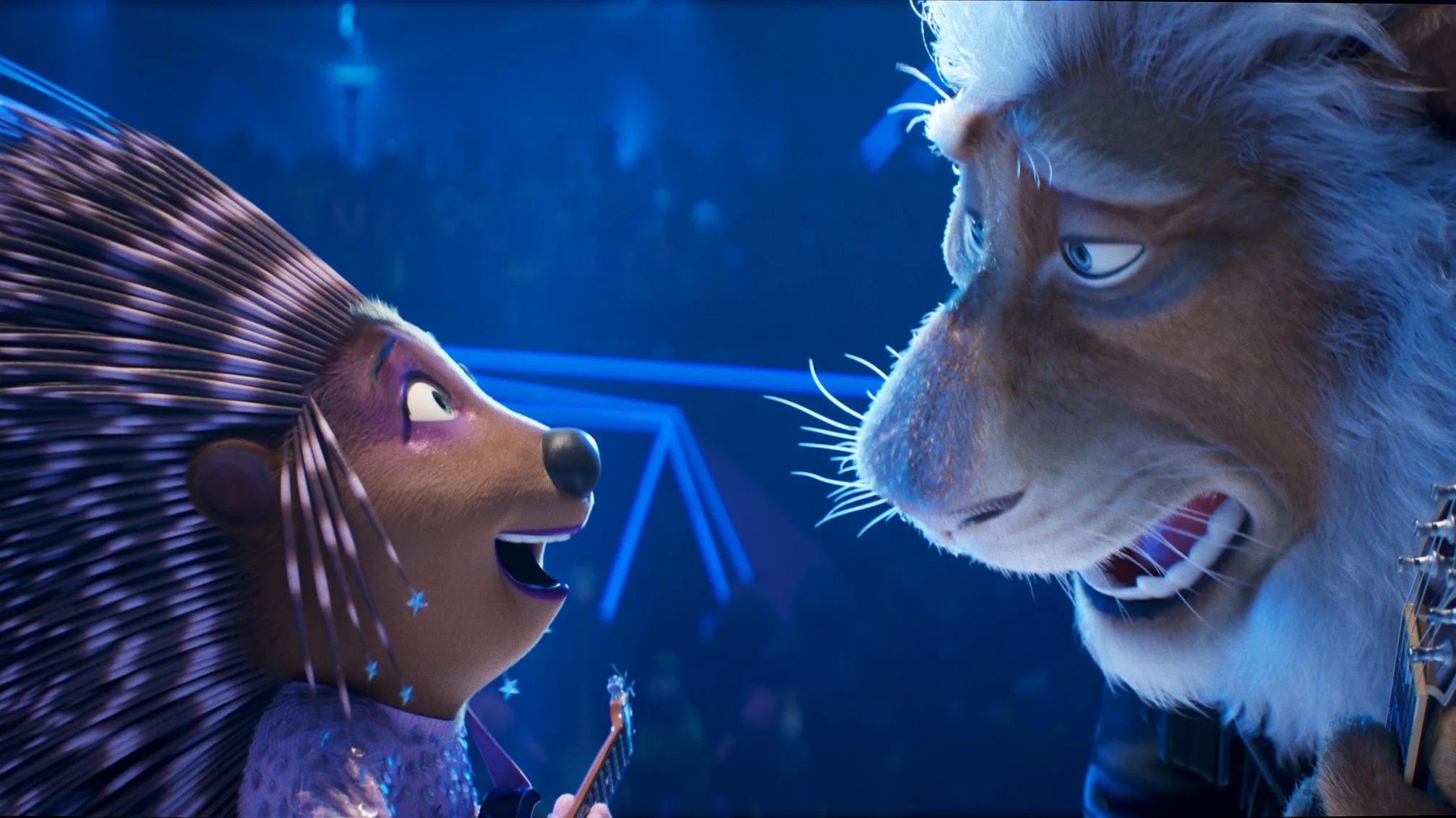
Sing 2
The best part about this animated musical sequel is hearing all the big name performers (including Scarlett Johansson, Matthew McConaughey, Reese Witherspoon, and Taron Egerton) back as their adorable animal selves. In true sequel levelling-up, they’ve added a few musical voices: Halsey, Pharrell Williams, and U2’s Bono as Clay Calloway — a reclusive musical superstar who the gang need to find and bring out of retirement. The first movie had a lot of pop music spoofs with each character auditioning for McConaughey’s Buster Moon (the koala) for a chance to be included in his show, but now they are all part of Buster Moon’s Las Vegas (actually it’s called Redshore City, not Vegas) spectacular that he desperately needs to make a success in order to live up to his deal — his life depends on it — with entertainment mogul Jimmy Crystal (a mobster-style white wolf, voiced by Bobby Cannavale). The storyline is frankly ridiculous and is merely meant to string together various subplots involving the various characters. Egerton’s Johnny (the gorilla) butts heads with his dance teacher’s pretentious and formal manner; Witherspoon’s Rosita (one of the pigs) has to overcome her fear of heights for a stunt in the show; Tori Kelly’s Meena (the elephant) learns how to perform a romantic number while experiencing the pangs of first love; and Johansson’s Ash (the porcupine) is a big fan of Bono’s Calloway (a lion) and helps him overcome his feelings of loss and return to society. While the plot lines are many (I haven’t even mentioned half of them), they kind of overlap each other in a way that doesn’t quite gel, but it doesn’t really matter as this movie finds its fun in the bright colours and lovable cartoon characters. The animation is really smooth and spectacular (including an amazing set and unreal theatrical effects — their show looks more expensive than any Broadway or Vegas show I have ever seen). The movie leaves your eyes twinkled and your heart warmed. It may not be anything super-deep or memorable, but it’s a delightful little show. (3.5 out of 5)
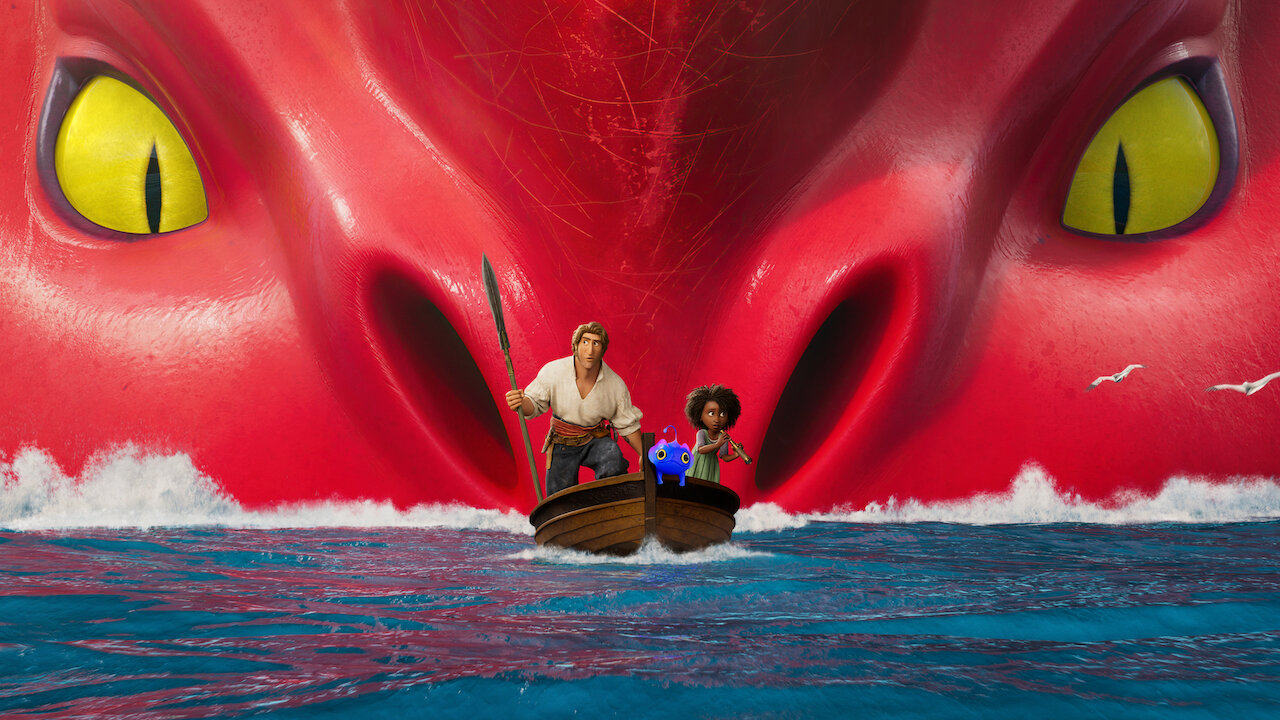
The Sea Beast
This is a magically-fun animated adventure movie for kids and reminds me so much of How To Train Your Dragon that in my mind, they exist in the same universe. From a production point of view, Chris Williams, the director of this non-Disney movie (it’s on Netflix), is a former Disney person who directed Big Hero 6 and co-directed Moana. That last credit is very interesting because one of the most impressive things to me in Moana was how well-animated the water was. However, the animation of water in this movie is even better. From the oceans, to the waves and spray, it is beyond photo-real and you’d be forgiven for thinking that it was actually videography spliced in. As you’d expect from a movie about ships and sea beasts, there is a lot of time spent around water, so this is a crucial element to the movie — and Williams and his crew have nailed it completely (watch whenever a character falls into the ocean — the way the splash and bubbles are depicted is flawless). However, this is hardly a water animation demo reel, and I promised that it was a magically fun adventure, so I’ll say that the story is not bad. We follow the crew of the ship “Inevitable” who are hunters — like pirates, except more legit and they don’t plunder and rob you. Instead, they hunt the sea monsters that populate the oceans (wreaking havoc on ships and shipping). The Inevitable is home to a grizzled Captain Crow (voiced by Jared Harris), and hunter-hero Jacob Holland (voiced by Karl Urban — performing a kinder and less-crude version of his Butcher character from The Boys). While there are some spectacular action sequences of hunter vs. sea beast in the first half of the movie, by the second half, the story takes a “Disney” kind of turn into family-friendly postive messaging. A young stowaway named Maisie joins their crew and ends up getting stranded on a beast-filled island with Jacob. In the course of their own little adventure they learn a bit more about the true nature of beasts and the rest of the movie becomes a lot less frantic and a bit more mellow. While Maisie and Jacob’s island adventure is cute, enjoyable fun, I also feel like I’ve seen so many recent examples of “babysitting” stories in shows and movies that it’s becoming a new genre. I realize that kids like to see movies featuring characters who are kids, and as many moral lessons they can teach the cynical adults the better. However, as a cynical adult watching a kids movie, I wish it were a bit less like that and more just rollicking action. I still thought The Sea Beast was a really good movie (that would surely have become a classic if it had been released by Disney rather than Netflix) but now it kind of feels a little too forgettable — which is just such a waste of some phenomenal water animation. (4 out of 5)
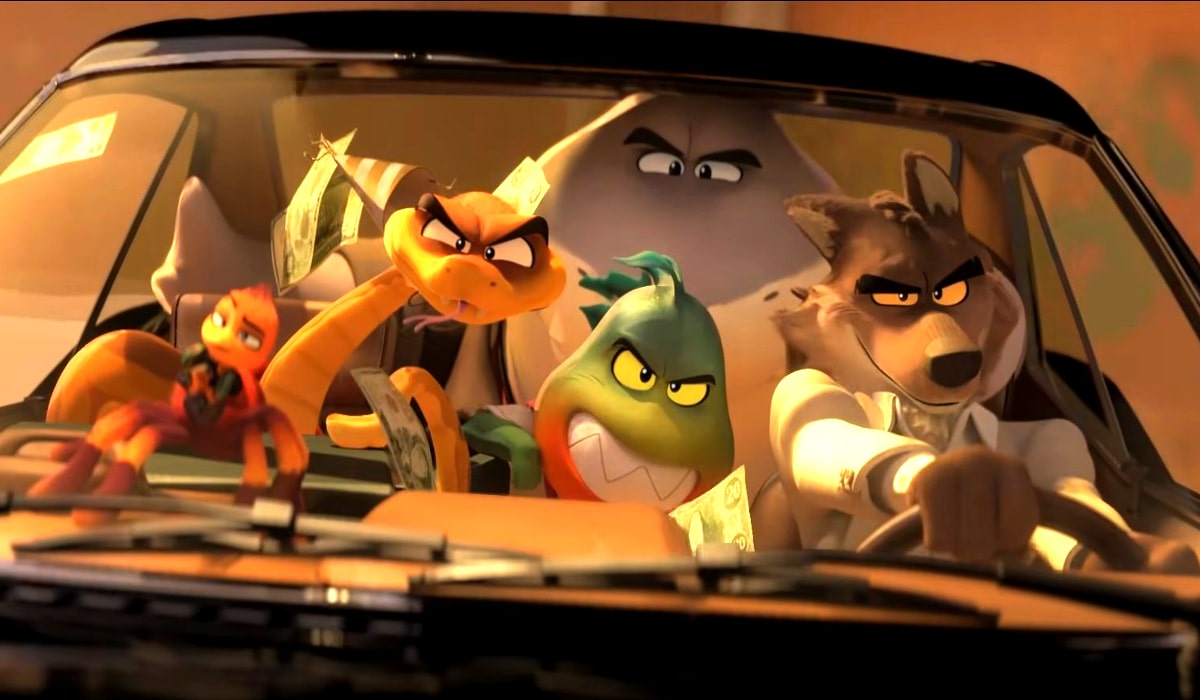
The Bad Guys
While you’d think that an Oceans 11-style caper featuring walking-talking versions of traditionally feared animals (that’s why they nicknamed themselves the “bad guys”) such as a wolf, a snake, a shark, a tarantula, and a piranha would be be the formula for some cartoonish fun true to the legacy of Disney movies (though unfortunately this is also not a Disney movie, but Dreamworks). Sadly even though the production values are top-notch, and the animation is pretty great, I still found so many conceptual head-scratchers and storyline believability problems that I could not really get into or enjoy this movie. First, the humanoid animal characters didn’t make sense. Unlike Disney’s Zootopia, these animal characters exist in a world where almost everyone else is an actual human, so how do these animal-people exist, and why do humans just accept this? (There’s even a scene where the shark is pretending to a pregnant woman going into labour — and people don’t see through this!) It also bothered me that while the shark and piranha both had two arms and walked on two legs, the tarantula walked on six legs (two legs were treated as arms) and the snake had to slither around on its belly (though it did wear clothes and prosthetic arms, on occasion). Similarly, there was a scene where the bad guys try to get a cat out of a tree (as an image-rehabilitating good deed); and while it didn’t bother me too much that a talking wolf is trying to help a dumb cat, it still didn’t make any sense (Gosh! How many times do I have to say that?). Nevertheless, story-wise it also seemed to owe a lot to Zootopia, but that movie was way better, so I would not even consider these two movies sharing a universe. I’m not going to bother summarizing any more of the plot, but I found it wasted a pretty fun setup with some confusing plot developments. Characters voiced by the likes of Sam Rockwell, Awkwafina, Craig Robinson, and Richard Ayoade, make for a lot of fun interactions, but that was not enough to make up for the way too much of this movie didn’t make sense. (3 out of 5)
Belle
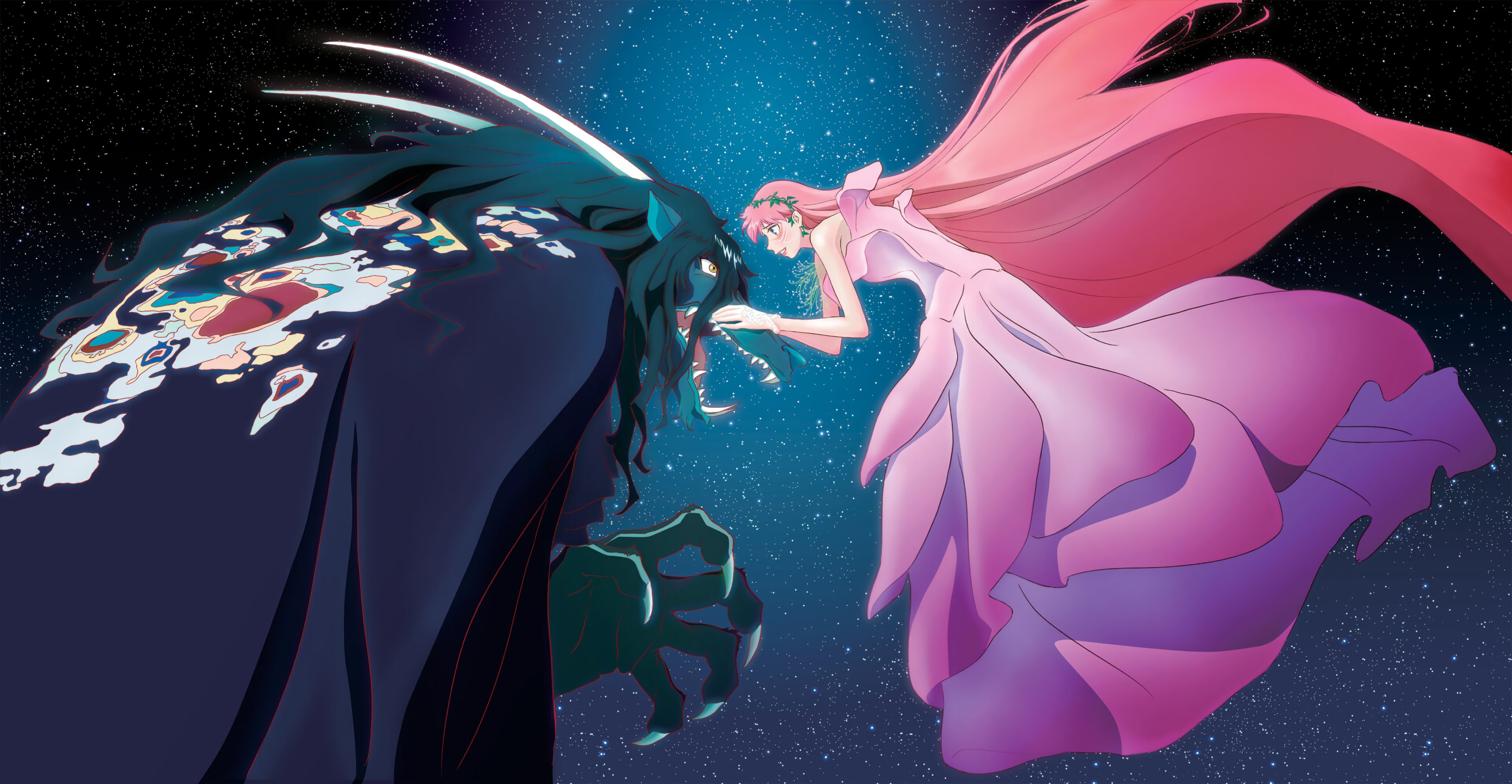
On to the Japanese anime portion of the program, I think one of the most anticipated movies of the year for me was Belle — another animated gloss on the classic Beauty and the Beast fairy tale. But more importantly this was the latest movie from my favourite anime director, Mamoru Hosoda. I have loved all his other movies, including Wolf Children, The Boy and the Beast, Summer Wars, and The Girl Who Leapt Through Time. However, when I read mediocre reviews of this movie I was a bit worried and I did not risk pandemic conditions to see it in the theatre. Sadly, that was a good call. While the animation is stunning and full of the kind of imaginative visual detail that is Hosoda’s trademark, I found the story and characters disjointed and uninteresting. The movie does not adequately connect how Suzu, a socially-awkward schoolgirl with a tragic backstory, would be able to reinvent herself into Belle, a Beyonce-level musical superstar in the virtual universe called U. Before they have time to explain or explore Belle’s story, they introduce the Beast — an even more enigmatic monster who disrupts U without a clear motive. He seems to connect with Belle and she with him, and the latter half of the movie focuses on her trying to find out his true identity (though I don’t see how she could possibly figure that out from among 5 billion accounts, even with an implausibly-skilled computer hacker as a best friend IRL). There were a number of real world plot threads introduced (including kind of a love interest voiced by The Good Place‘s Manny Jacinto) that don’t really pan out, nor do they play out virtually in U, either. It’s almost like two separate movies in the two environments that have next to no relationship with each other. Since I didn’t really care throughout the movie, the big climax where we find out who the Beast really is, and everything converges on helping or destroying him, seemed more like a chaotic mess of forced plot-threads. This film was such a letdown and a waste of artistry that I am truly concerned about whatever Hosoda does next. (3 out of 5)
Bubble
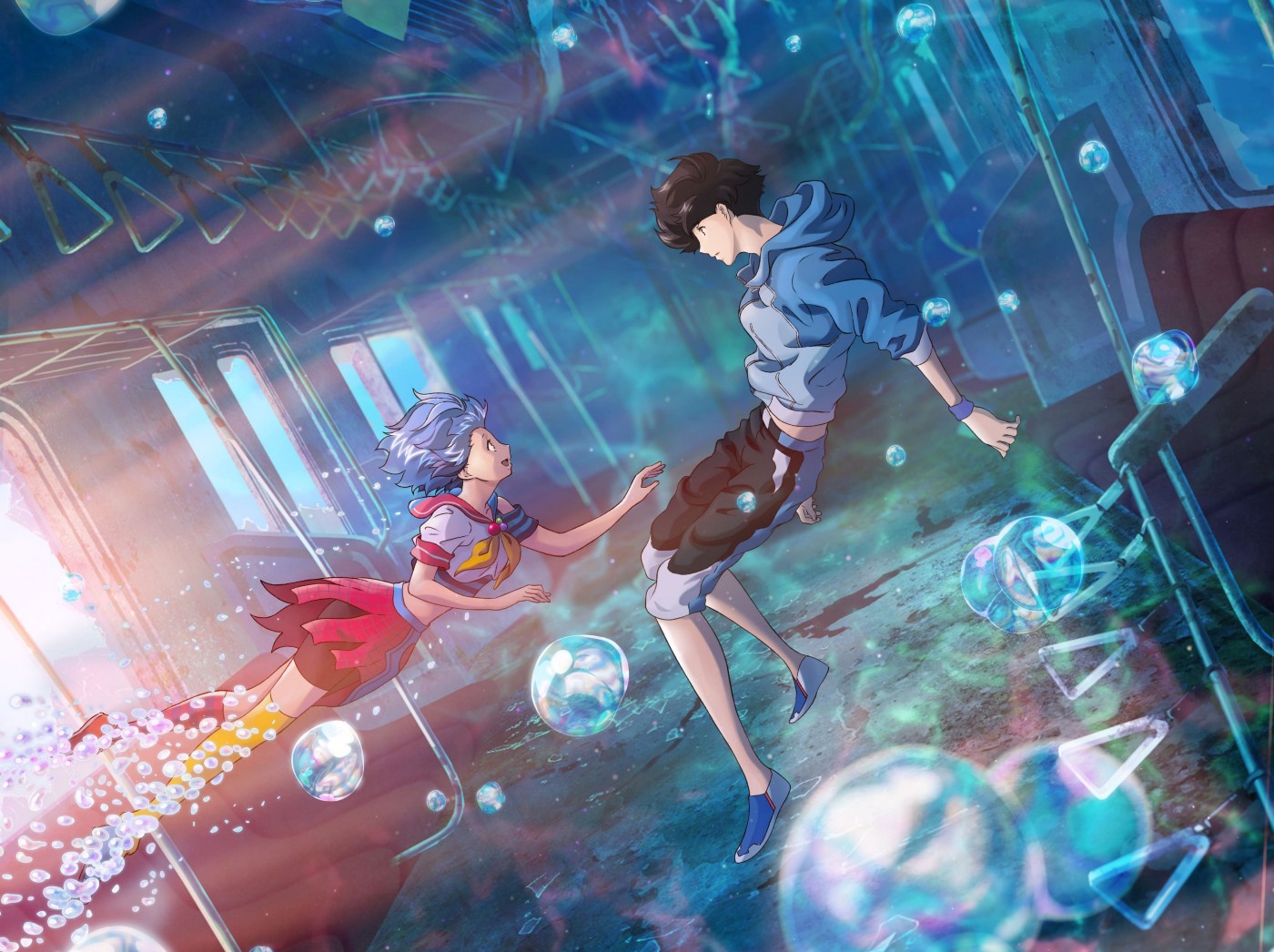
When I planned to watch this movie on Netflix, I had know idea that I’d be watching another anime inspired by a classic fairy tale (that also got turned into a Disney megahit). This time the story of a sunken post-apocalypse Tokyo where gangs of kids do parkour to race across abandoned buildings (and strange gravity-defying bubbles of liquid) is actually inspired by Hans Christian Andersen’s The Little Mermaid. One day our hero Hibiki (who is a skilled parkour traceur) nearly drowns and is rescued by a girl named Uta, who manifested from one of these mysterious bubbles. The rest of the story is somewhat contained as Uta gets adopted by Hibiki’s team/family and they compete in more races to earn and survive. All the while, Hibiki tries to understand his connection to the alien energy coming from Tokyo Tower and the mystery of the bubbles. A lot of this story is pretty out-there, but most of the focus is Uta learning about how to be human and how we have feelings and relationships, and also on these traceur teams and their lives together in competition with each other for survival. The animation is top-notch anime style, with lots of smoothly kinetic scenes — particularly with the parkour. While I don’t love the kind of not-quite-explained magical ending of this movie, I admit that it’s not atypical of an anime movie to have this kind of resolution (so maybe I can just accept it). I’m also not sure whether the echoes of The Little Mermaid actually helped or impacted the film. By the end, I kind of forgot about the parallels. Overall, the movie is pretty fun and innovative, but I would not put it in the top tier of anime movies. Nevertheless, it gives me encouragement to watch more anime (especially on Netflix). (4 out of 5)
 Alvin's Adventures in Pop Culture