As a fan of fantasy stories, I am loving that this post-Game of Thrones resurgence of the genre is making a big-budget run at streaming success. Previous seasons already gave us The Witcher and The Wheel of Time (sadly neither have become my favourites), and now we have a few more series bringing their tales to our screens. It’s a clash of swords and prequels between HBO’s House of the Dragon (a return to GOT’s Westeros two-hundred years earlier to witness the Targaryen civil war, referred to as history during the OG series) and Amazon’s The Lord of the Rings: The Rings of Power (harkening back to a time in Tolkien’s universe when Middle Earth was the new world, and a younger, butt-kicking Galadriel was hunting down a Sauron who had not yet become a giant eye of flame). Despite some similarities in concept, all the high fantasy shows are pretty different (at least from this fan-boy’s perspective). Before this epic showdown, Neil Gaiman’s previously unfilmable masterpiece, The Sandman, made a spectacular debut on Netflix. Finally, I am going to throw in three more genre series for good measure: the Marvel/Disney+ debut of She-Hulk: Attorney at Law, the season three return of the animated Star Trek hit, Lower Decks, and season six of the unstoppable Rick and Morty.

The Lord of the Rings: The Rings of Power
Despite the name of this show clearly being too long, I really enjoyed the two episodes that have been released so far and kind of love where the series is going. I know that Tolkien/LOTR fans have not been kind to this series as it may be seen as diverging too much from source material and previous adaptations in both tone and spirit. I am not a Tolkien purist, so I can easily enjoy the show for what it is – a big-budget fantasy series set in a beautifully rendered, expansive world. I don’t care that Galadriel (remember Cate Blanchett glowing in The Lord of the Rings?) and maybe even Elrond are not the same elves that we knew from the Peter Jackson trilogies (They’re immortal! People change!). However, the style and production design seem absolutely inspired by, if not faithfully matched, to those films. This show looks really gorgeous. I’m also enjoying the storylines that have been set up in the opening episodes. It can be kind of tricky to write for a prequel series since certain events and characters have their fates pre-determined by the subsequent main series. Whatever happens, we know that neither of the aforementioned elves is going to die (or even get seriously injured) because we know what they’re like when they meet up with Frodo and friends. So, to provide some stakes, we need to follow the stories of other characters as well. In the first episodes, we’ve met some dwarves, some humans, some other elves, and some halflings (who were called “harfoots” instead of “hobbits” in the past, apparently). I don’t know how many of the characters we’ve met existed in Tolkien’s original footnotes or marginalia from which this series is supposed to be based, but again I don’t really care. I’m already quite invested in what happens to the halfling girl who wants to help a (I’m guessing) wizard who fell from the sky; or the elf and human couple who want to learn what happens to a mysteriously destroyed human village (not to mention her son who has discovered an evil little relic buried beneath their floorboards). These and other stories bring so much more fun and fantasy to the screen than some Galadriel backstory or Sauron origin story alone that I’m really here for it all.

Side note: Regarding the diversity controversy that is continually brewing around fantasy shows, I love that actors of a wider ethnic spectrum are being cast into roles traditionally filled by Caucasian actors. However, I wish that, first, more Asians would be cast in roles big and small (after all, we make up more than half of the world’s populace) and second, that writers and storytellers would line up the ethnicities of the actors with something relevant in the fantasy world. Don’t just sprinkle POC actors around randomly without a reason tied to culture and historical migration. In essentially pre-industrial, pre-urban contexts, it’s not logical for small, isolated communities to be ethnically diverse. Instead, use a single ethnicity (which doesn’t have to be white) for each group, varying from group to group, thus creating diversity among the many communities in the world of the story. Allow them to mingle with each other when it makes sense (e.g. when they are brought together by circumstance, or in larger cosmopolitan cities). I don’t want to get down too deep of a rabbit-hole (Too late!) but with so much thought and research given to making costumes and sets feel authentic, the same care can be taken with casting and diversity as well. I think this approach would be so much more satisfying to see.
House of the Dragon
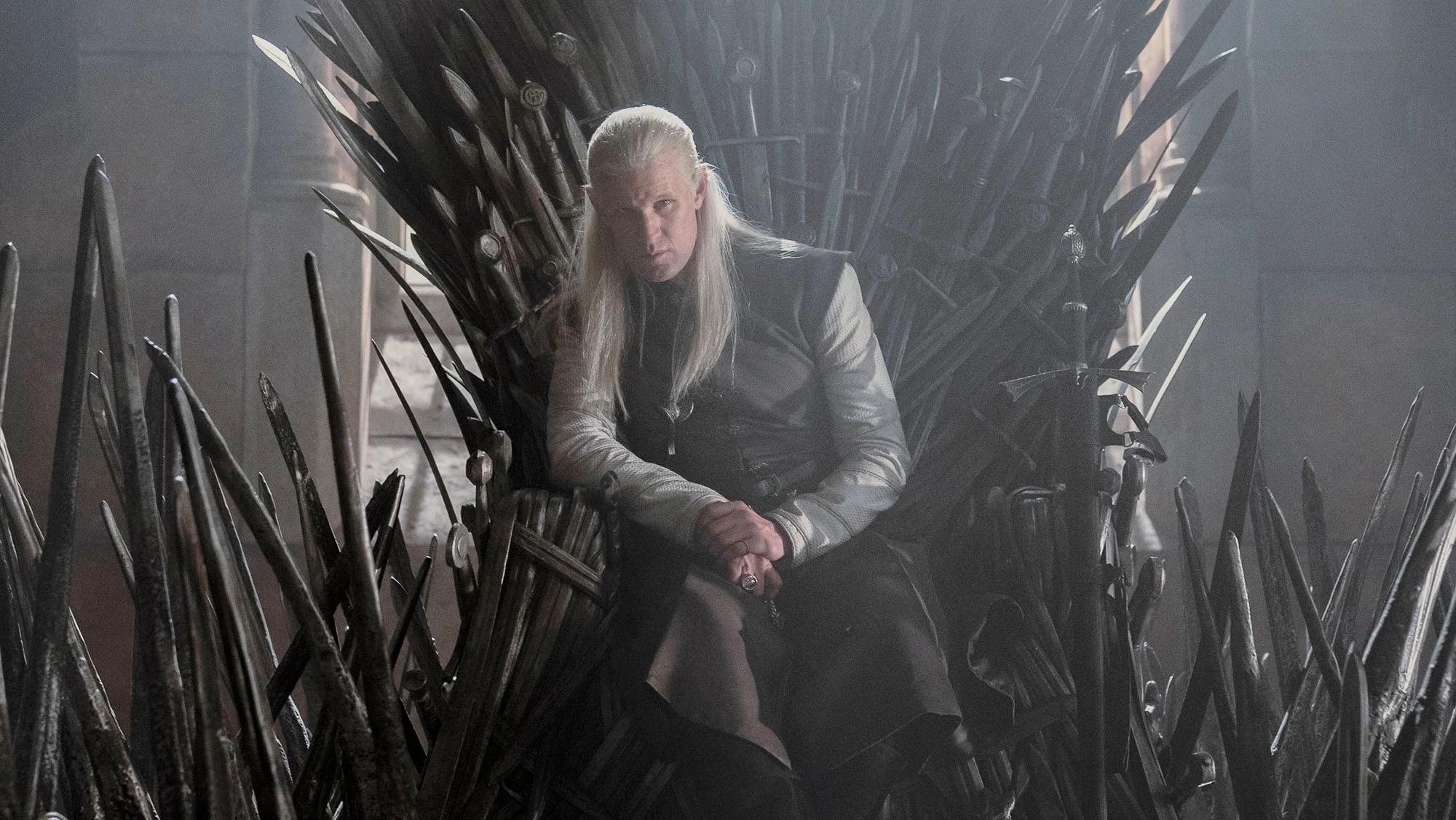
Though it’s meant to be a prequel to the original Game of Thrones series, set centuries earlier, this show could easily have been a sequel. Putting on screen a conflict between two sides of the Targaryen family (who barely existed in the time of GOT), this series has stuck very much to the look and feel of the original fantasy drama series. Granted, there are different noble houses in ascendence at the royal court, and (for some reason) the blades that make up the Iron Throne are now spilling out all over the throne room, but otherwise, things feel very much the same. Even the king’s small council is the same kind of group, with a “hand of the king” as his closest advisor. There are still maesters who administer healing and knowledge, and king’s guards and city-watch who enforce the law and protect the rulers. (They even use the same melancholy theme music from the original show — but the visuals show blood flowing around the model/map instead.) Similarities aside, this show (focusing on a few royal families at the heart of the conflict) feels smaller than GOT. Much of the drama focuses on teenage princess Rhaenyra, who is named to be heir to the throne by her somewhat ineffective father, King Viserys I (played by Paddy Considine) after he loses his infant son and his queen after childbirth. Milly Alcock is great portraying the younger Rhaenyra in the first few episodes. She is smart, confident, and capable, yet she struggles to gain recognition by the patriarchy. True to its GOT roots, this series pushes boundaries on brutality, sex with whores, and nonchalance about marrying off tween girls (It was so off-putting to see Viserys strolling in the garden with a potential bride who was only 12 years old) and about incest (Targaryens are infamous for it, and Viserys is even counselled to betroth his teenage daughter to her infant half-brother — ick!). It’s all just life as a royal/noble in Westeros, I guess. As much as I enjoy returning to that fictional world, especially with all the drama and the dragons, I’m really hoping that this series will deliver something fresh soon. If not, it will end up feeling just like some kind of side-story or flashback that could have just been part of the original show.
The Sandman
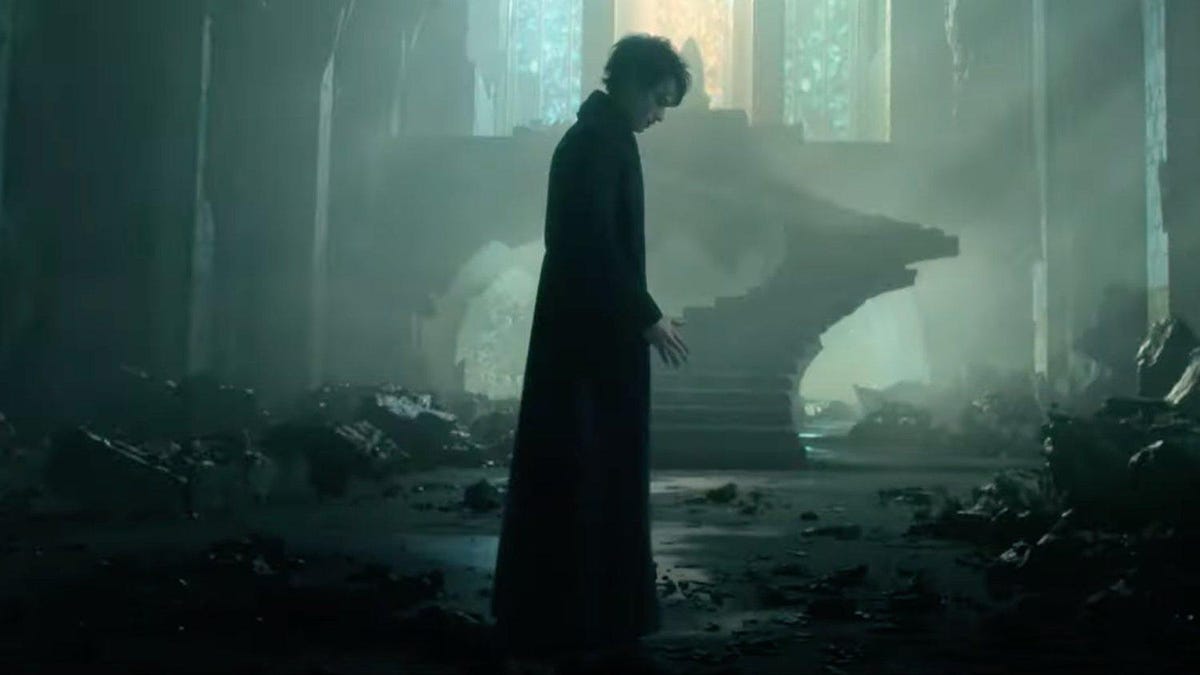
I’m really glad that Netflix was able to pull off this series, because it feels quite unique. Starting out as the story of Dream of the Endless (essentially a personification of the concept of dreams and the literal ruler of a magical dimension where we all go when we dream) who is accidentally summoned while visiting Earth, and imprisoned for a century. One of the main driving forces of the first half of the series is that Dream needs to find and recover his iconic instruments (i.e. a bag of magical sand, a magical ruby pendant, and his magical mask/headgear). His quest takes him around the world and beyond, venturing into Hell, where he is challenged by Lucifer (played by GOT‘s Gwendolyn Christie). The other plot thread throughout the season is that Dream was on Earth originally because he was hunting some runaway nightmares who had taken form on Earth and were potentially going to cause harm if not brought back to the Dreaming. One of the worst of these was The Corinthian, who took the form of a super-charming serial-killer (Yes, there’s a bit of a horrific undertone to a few of the episodes). Only part way through the series did it click to me that this narrative doesn’t quite follow a season-long arc, but is kind of structured in clumps of story. There are a lot of other characters introduced even within the relatively short series. I cared more about some than others, but I enjoyed them even more once I realized that they were not meant as diversions from the main, Sandman-focused narrative. Instead, thinking of each bunch of episodes as a separate story arc made it easy for me to enjoy (especially when screen time in the second half of the season was taken up by a new character, Rose Walker, and her assortment of friends, family, and acquaintances). The stories are quite unconventional and the characters are interesting and unique. I’m hoping that Sandman gets a second season on Netflix if for no other reason than it keeps the spectrum of fantasy stories broad and wide.

She-Hulk: Attorney At Law
As I’ve said before, it’s not very clear what Marvel’s strategy is with some of its newer shows (and movies). Will they somehow fit into a big story arc? This is even more accurate to describe the newest Disney+ TV series, She-Hulk. The title character is somewhat iconic in the comic book Marvel universe. She-Hulk (aka Jennifer Walters) is the cousin of Bruce Banner (aka the original Hulk) who inherits her cousin’s tendency to become big and green due to a blood transfusion (or merely blood contact and contamination was enough on the show). At first, the two Hulks work together to help Jennifer adapt and control her transformations, but since she is not interested in becoming a superhero but would prefer to return to her “normal” life as a successful attorney, she quickly gives that a try. Of course, it’s naive of her to think that she can return to normal when media (and superhuman) attention gets in the way. Instead, after her first post-She-Hulk case is crashed by a superhuman named Titania (played by The Good Place‘s Jameela Jamil) she pivots to becomes a lawyer who works within that superhuman world. Her first big case is to arrange the parole of Emil Blonsky (aka Abomination — one of the enemies of the original Hulk from the 2008 movie).
One of the best things about this series is its humourous, light tone. It’s often been compared to the 90s show Ally McBeal for its witty and whimsical take on legal drama, and fourth-wall breaking scenes from the main character (which Ally actually didn’t do). Tatiana Maslany (Remember her from Orphan Black?) does a great job and seems to be having fun in the title role. Nevertheless, it’s really more of a superhero show than a legal show. Its half-hour episodes are too short to take us through any real cases, and they don’t spend too much time in the courtroom making arguments. What I like about it as a superhero show is that it’s a great way to open up the universe, locally. The show is set in California so it provides a locale for different Marvel characters to show up. New York and Washington D.C. already have all kinds of baggage from past Spider-man, Avengers and Captain America movies, so this is the perfect way to broaden the scope, with characters that are stranger and wackier. Finally, I love that She-Hulk is different from other characters because she doesn’t spend all her time wondering about her destiny or why she got her powers. All that soul-searching is becoming a bit tired, so this series is actually pretty refreshing. Now let’s see what else is in store for her.
Star Trek: Lower Decks
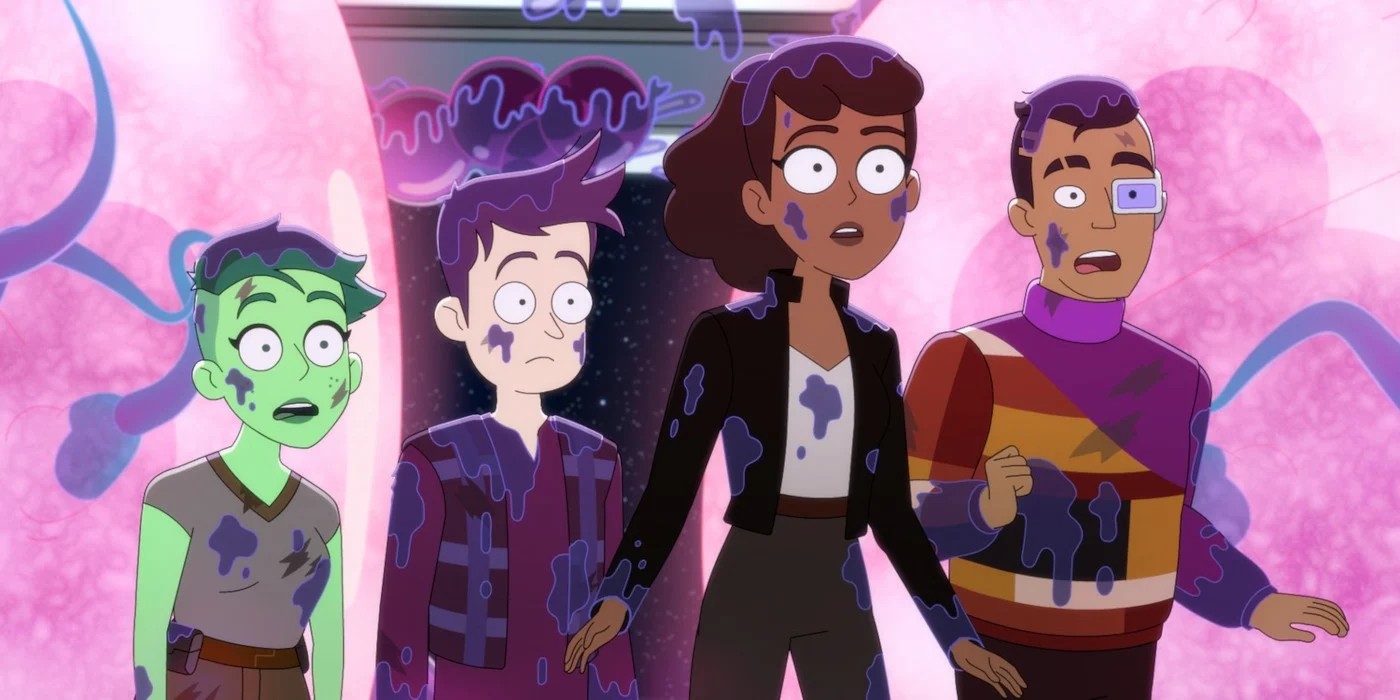
While last season ended with a cliffhanger (the captain was arrested for destroying the Pakled planet) that led to the storyline of season 3’s first episode. In the premiere, the captain’s daughter, Mariner, gets her lower-deck gang to join her on a mission to prove the captain’s innocence. As fun as it was to see this animated sitcom’s take on a well-trodden storyline, I love how the comedic tone lets the air out of things (spoiler alert: their help wasn’t ultimately needed). After a few seasons of getting to know the main characters (while being simultaneously distracted by all the Easter eggs), I’m glad that the show is really hitting its stride by season 3 (much like classic Star Trek: The Next Generation did as well). Each episode is now a wonderful blend of a storyline that might actually find its way to one of the other serious Trek shows, and the satirical gloss of the animated style (not to mention all the great Trekker fan service). At first I wasn’t sure this series was going to work, but now I even wish they’d do more animated, funny Star Trek (especially with more of the existing characters and familiar villains coming back in cartoon form).

Rick and Morty
Finally, hot off the season 6 premiere, the grand-daddy of the adult, satirical, sci-fi animation sub-genre, the Smith family are back and more canon than ever. Proving truth to the rumours that this season would focus more on continuing existing story arcs, the first episode picked up in the aftermath of season 5 where “evil” Morty destroyed the Citadel of Ricks and made interdimensional portal travel impossible. When super-genius Rick is rescued by his cloned daughter, “Space Beth”, who became an intergalactic freedom fighter, he tries to fix the portal problem by resetting things (and ends up sending everyone back to their home reality). Since most of their realities have been seen in previous episodes, it’s a great way to revisit past stories by forcing Morty and other characters to understand the consequences of some of their crazy, sci-fi recklessness. Also, a new “villain” emerges when Rick returns to the reality where his wife and daughter were killed and we get to learn more about that backstory and his pursuit of the person who caused their deaths. As for me, I’m totally here for all the canon stuff. While Rick and Morty’s mythology is incredibly convoluted and confusing, this new focus only ups the ante on one of the most satisfyingly science-fictional shows on TV. It’s really hard to predict where things will go, but it’s always super-fun following the trail.
Wow that’s a lot of shows! Sorry I waited so long, but they were all staggered throughout the last couple of months. If fall is now becoming the premiere season for fantasy TV, I am incredibly excited — I mean, I’m excited that there’s enough fantasy to make a season, never mind that they are all coming to air around the same time. I’m really hoping that both House of the Dragon and Rings of Power have a few good seasons in them. The last thing I want is for them to cancel each other out. Plus, with their high production values, characterizations, and gorgeous production design, I hope that other series (The Wheel of Time in particular) will also be motivated to make a better showing in those areas. Who’s here for a fantasy TV renaissance? Everyone?!
 Alvin's Adventures in Pop Culture
I thought The Sandman was excellent and will be rewatching that again soon. Currently watching House of the Dragon and liking what I have seen so far, but am definitely waiting for it to really cut loose with the crazy before deciding on whether to sign up for a Season 2. We do disagree on She-Hulk so far, but being on Team Marvel I’m still hanging in there for now. I have no experience with Tolkien or LOTR. While I hear that series looks great, I think there’s too much other stuff on the watch list to start down that long road…we’ll see!
Hey Bruce, thanks for the comments. Sorry you’re not enjoying She-Hulk. Hopefully it will turn more to your liking as the episodes progress. I’ve said it before myself that there’s too much TV to watch. It’s becoming so tough to prioritize (I recently started getting into anime as well — 30 years behind schedule — and so there aren’t enough hours in a day for me to catch up to all I want to watch!) Nevertheless, maybe you’ll pick up Rings of Power at some point when there’s a lull. 🙂
Alvin, believe it or not I actually found She-Hulk episode 4 a riot. Now that I know the series is committed to comedy I’m making the adjustment. Man, I don’t know where I’d ever fit anime into my mix!