Watching the sequel to James Cameron’s ground-breaking animated epic, Avatar, I was looking forward to an expansion of the fictional world of Pandora. In the climax of the first movie, we got a brief glimpse of the other Na’vi people around the planet, seeing tribes apart from the Omaticaya tribe who had been the focus of the first movie. That scene had given me hope that this sequel might bring us the story of another part of this world, another Na’vi protagonist, and another very different perspective of life on Pandora. However, (maybe taking a cue from the way Star Wars sequels seem to work since the Avatar franchise is now also owned by Disney), it’s perhaps understandable (if maybe not forgivable) that Avatar: The Way of Water merely continues the previous story with the same characters, but given a slightly new spin (i.e. just add kids).
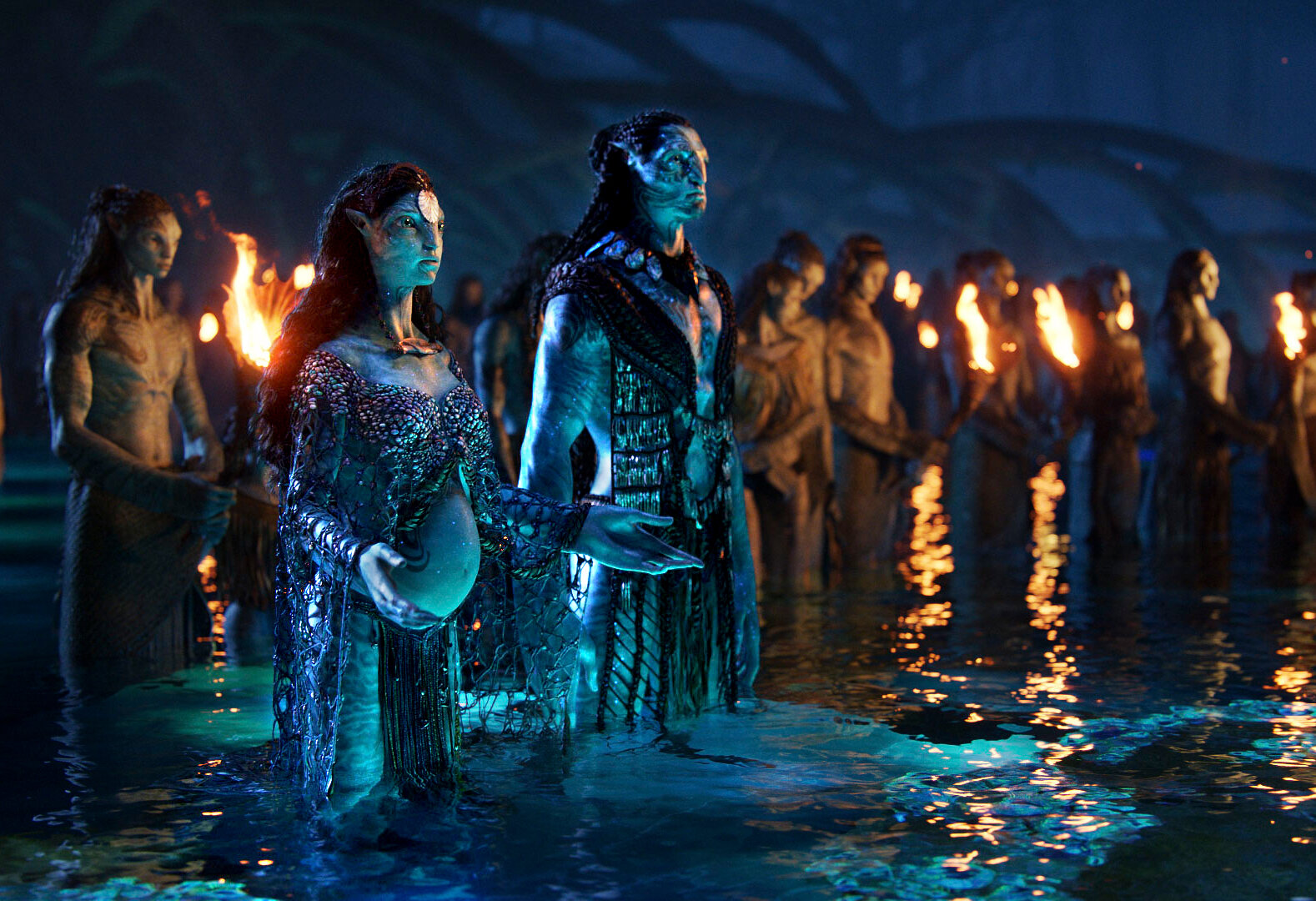
In the first Avatar, human marine Jake Sully (played by Sam Worthington) used his Na’vi avatar to infiltrate the Omaticaya on behalf of the human military only to “go native”, embracing their culture, becoming one of the best of them, and even taking their side in the conflict with the humans (in particular, against mercenary commander Miles Quaritch – played by Stephen Lang). In Avatar: The Way of Water, they find a fairly contrived-yet-predictable way to renew that conflict as the greedy, heartless humans come after Jake Sully (or should we call him “Jakesully”, now that he’s fully Na’vi) and his family. Rather than continuing to put the Omaticaya tribe in danger, the Sullys flee the jungles and head out to hide among the first tribe they encounter: the Mekayina – a tribe of aquatic Na’vi. For the first half of the movie, we watch them teach the Sully family how to dive, swim, and bond with aquatic creatures (Yes, conveniently there are aquatic creatures equivalent to the flying beasts used as Na’vi mounts in the first movie). There is also very little difference between this tribe and the Omaticaya (apart from their aquatic habits).
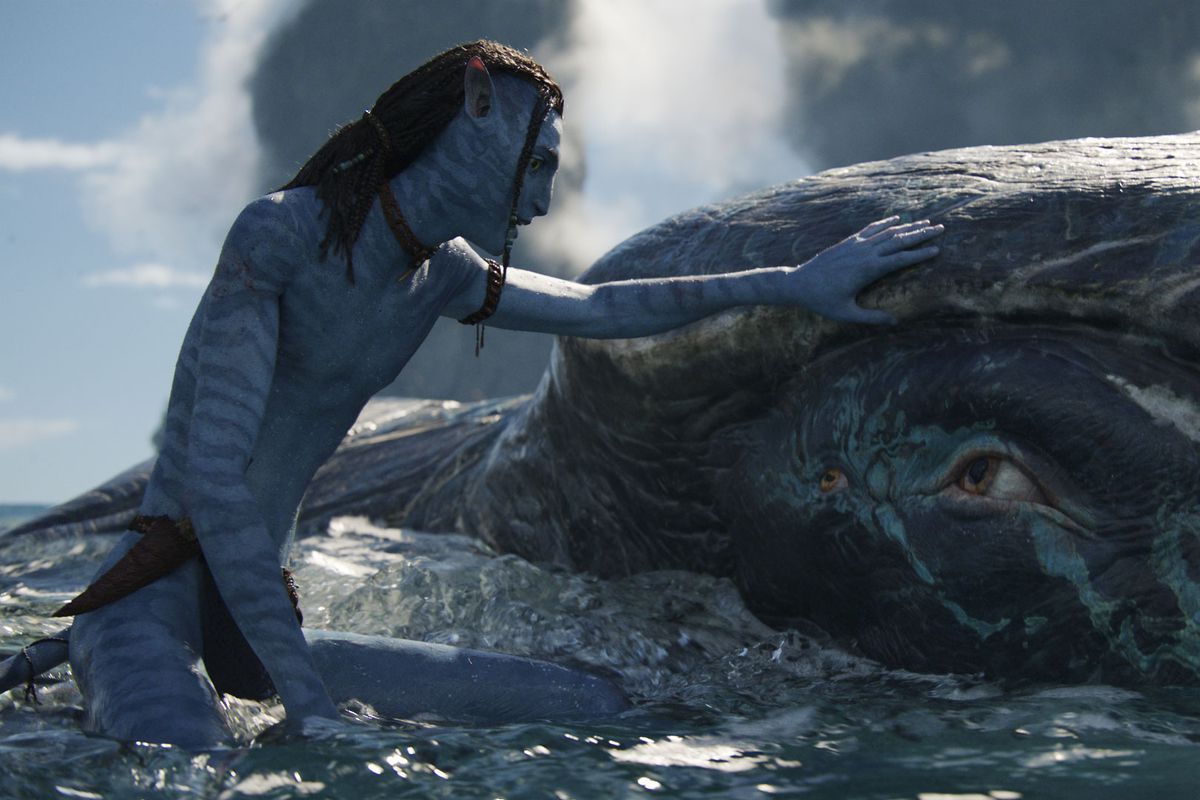
The visuals of the various oceanscapes and alien creatures are even more incredibly realized in this movie than in the first Avatar. Arguably, they make the ticket price worthwhile, more than the story and character drama (which are unfortunately pretty cliche). We get to watch conflicts between Sully’s sons and the sons of the Mekayina chief, which lead to bullying, dares, and dangerous hazing. There is also drama when the chief’s daughter flirts with the younger Sully son, and there is trouble when they tease and taunt Sully’s adopted daughter Kiri. Let’s just say there’s a lot of CW-style angst going on. Again, I am guessing that these storylines were meant to broaden the appeal for all the movie-going teens, but I think a much more interesting character to have explored was the character of “Spider” – a human child that befriended and became an unofficial member of the Sully family. There is a lot of potential in his story (which I hope they will focus on in future sequels) because he has connections both to the humans and the Na’vi.

One of the most impressive aspects of the animation in the Avatar movies has got to be the movements, and especially the facial expressions, of the characters. Despite their otherworldly, cat-like appearance, it’s easy to forget that they don’t physically exist. It’s hard to believe that they aren’t even actors in costumes or make-up but entirely computer-generated (with motion-capture assistance). There are many dramatic and emotional scenes (especially in the second half of the movie) and the Na’vi (because this is what is expected from tribal people) are prone to wailing, so Neytiri (Jake’s Na’vi wife, played by Zooey Saldana) is especially that way. I was actually very moved by Neytiri’s reactions to the tough situations that she found herself in as a mother wanting to protect her kids, and (while giving due credit to Saldana’s performance) the CGI was also acting its ass off!

In addition to the character animations, another impressive aspect was the water animation. I have already suggested in past reviews of Disney’s Moana, or Netflix’s The Sea Beast that you can impress me quite simply by making scenes in the water that are incredibly photo real and physically accurate. With a title like Avatar: The Way of Water there’s no way that they weren’t going to get that right. Plus, between some of his other movies, including The Abyss, and another little-known project called Titanic, director-writer-producer James Cameron has made this his cinematic specialty. From the aerial scenes flying over crystal clear oceans, to vivid underwater reefs full of exotic life, to the requisite “shark attack” scene, to the subtle way that droplets cover a person’s skin after they get out of the water, or how spray and splashes look around weapons fire, the aquatic scenes all looked impressively real. There were even scenes in a sinking vessel (I know what you’re thinking, but I don’t think Cameron reused leftover Titanic footage) that boggled my mind how they could achieve without actual physical sets and actors in water. I’ll have to watch a making-of documentary to find out all the movie tricks employed. The visual effects of this movie are levels above any other, and that makes this movie worth seeing (and I only saw it in regular 2D, despite the availability of IMAX and high frame-rate (HFR) versions as well).
While there are many plot threads that set up the already-planned sequels for this movie, I am very concerned that my wish for a broader Pandora story is not likely to happen. More likely the same high level conflict will keep replaying. The rich and greedy humans will continue to seek to exploit this planet (and they need to destroy the Na’vi first, apparently, to get to those resources). Jake Sully will continue to stand in the way, and will lead tribe after tribe to small victories over the human “sky people”. Unfortunately, when the next sequel comes out in two years, I am skeptical that I will be as impressed with the CGI (what more can they do?) and unless they level-up on the storytelling, I have a hard time imagining what would bring me back to Pandora a third or fourth time. (4 out of 5)
 Alvin's Adventures in Pop Culture