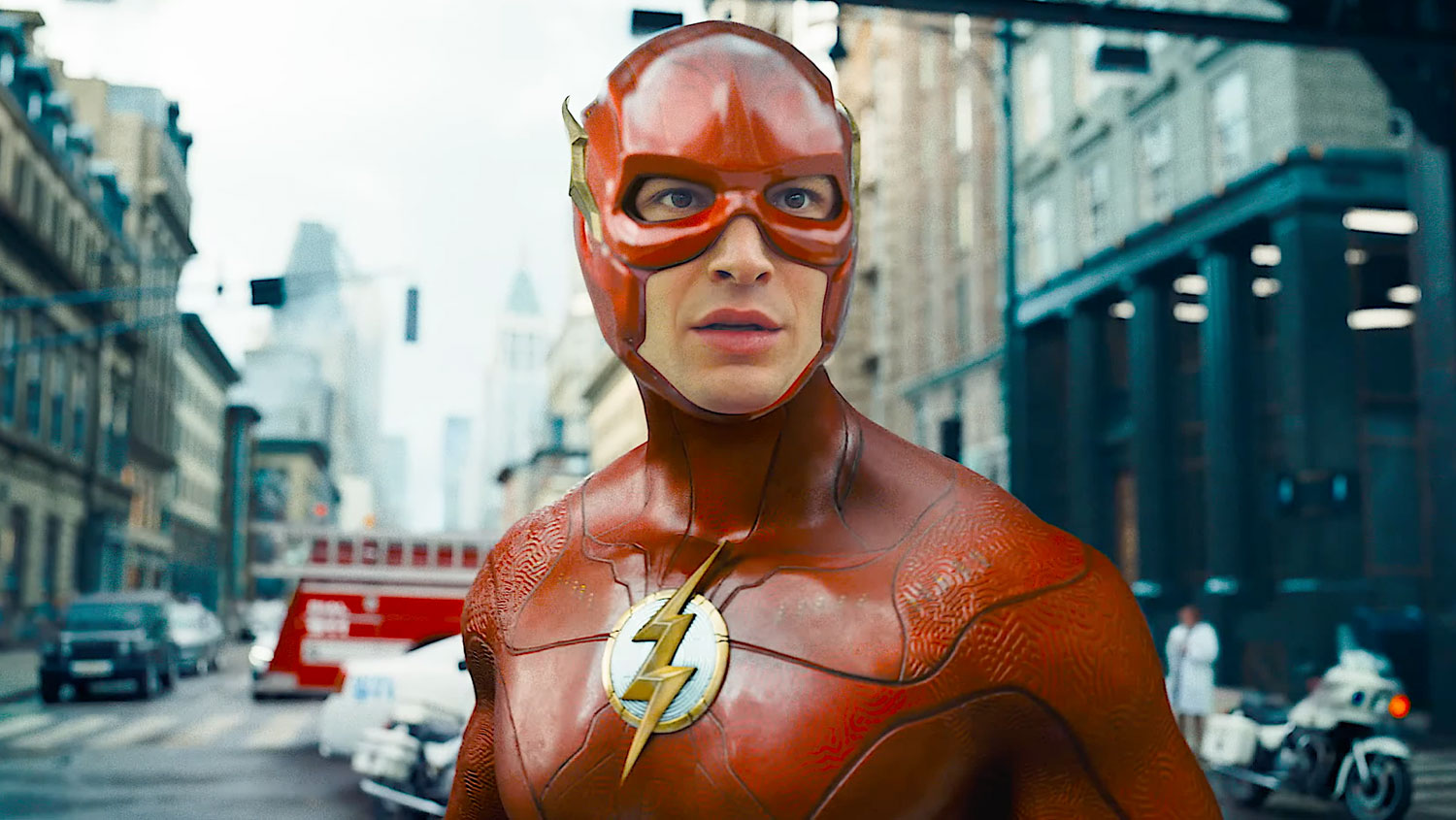
The box office is a pretty tough place these days — even for a big-budget superhero action movie. Fans are told more about the machinations of the mega-studios in the background than the actual movies themselves. We hear about 10-year roadmaps, reboots, and the ever-elusive shared cinematic universes. All that static was no help to a movie like The Flash, which feels like a fun instalment in the continuing effort to build a DCEU (DC Comics extended universe). Unfortunately, if you’ve been following all the announcements, these remaining films are actually being “burnt-off” ahead of another reboot effort (led by director James Gunn) to build a new DC universe of films. That not only makes this movie a bit of a “throwaway” experience for fans of DC, but it adds an especially ironic twist given its subject matter (more on that below).
The movie begins as a continuation of the DCEU story, with Ezra Miller as The Flash (a superhero given superhuman speed by a freak accident of lightning and chemicals), where the members of the Justice League (including Superman, Batman, Wonder Woman, Cyborg, Aquaman, and Flash) now have full-time jobs saving humanity from one disaster after another. The Flash, as his alter-ego Barry Allen, is lining up for a sandwich at a coffee shop when he gets a call from Batman (still played by Ben Affleck) to help rescue a hospital in Gotham City that is crumbling (from an earthquake?). To Flash, this is all in a days work (and Miller plays the character with a very jokey attitude about these kinds of life and death situations) and he speeds over to save a maternity ward full of babies who are falling out of a window. We get one of those physics-defying CGI scenes where the speedster runs around moving objects and people while everyone else is falling in slow motion (relative to him). I didn’t love this scene, mostly because it seemed kind of like a waste of time and money (plus the CGI babies looked a little creepy) for a scene that had almost no bearing on the plot or no emotional value. The main thrust of the movie comes later when Flash realizes that by running really really fast, he can actually travel back in time (Take another punch in the face, physics!) and alter the past. On the eve of his father’s trial for allegedly murdering Barry’s mother, he decides to go back and change one pivotal thing to avoid his mother’s murder and his father’s being blamed.
In the comic book version of this story (known as “Flashpoint”), all of reality is changed and the ripple effects are felt throughout the various comic book stories. Unfortunately, in the movies, not as much of the wider universe has been established so the effect is limited pretty much to what we’ve already seen in other films. We revisit the events of 2013’s Man of Steel movie, where General Zod comes to destroy and take over the Earth, but for some reason there’s now no Superman to stop him. Unfortunately this is where the real world firing of Henry Cavill from continuing with the role of Superman that he began ten years ago starts nagging my mind. I keep thinking of how this feels like they’ve written the story around real-world business and casting decisions.
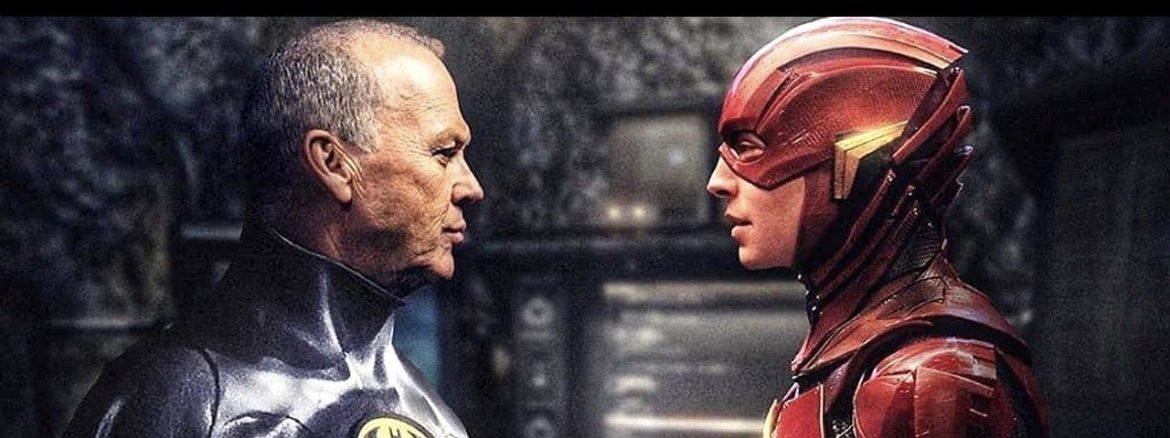
What follows is Flash’s attempt to stop Zod with the help of Batman (for some reason he’s played now by Michael Keaton, possibly continuing the same role/character from the 1989 Batman movie), his own younger self (Barry goes home to visit his parents in this revised reality, and stumbles upon himself as a college student), and Supergirl (another version of the character of Superman’s cousin, this time played by a new actor, Sasha Calle). The plot of this movie seemed very pointless to me because after Barry went and changed the past, and bad things happened as a result, any good sci-fi fan (or anyone who’s seen Back to the Future) knows that the only way to fix things is to change them back. So while I enjoyed some of the action, and the humourous banter between the two Ezra Millers was pretty good, I was just patiently waiting for this entire alternate reality to be reset. Also (as I mentioned earlier) on a meta level, I felt the same way about this movie itself since anything that is done within this DCEU cinematic reality will also be reset once the new James Gunn reboot movies come out. I’m pretty sure they did not have this parallel in mind when they created the movie, but it’s unfortunate how this played out for viewers.
Anyway, back to the movie, there are some OK action scenes when the good guys finally confront Zod and the bad guys. This time they were all fighting in the desert, so there wasn’t the same kind of city-destroying chaos as there was in Man of Steel, but it also seemed much less significant, since we are sort of following “second string” characters rather than the original Justice League, and we’re in an alternate timeline, so the stakes don’t really feel very high. The way that this movie attempted to raise the stakes on this whole story was with the question of who must die. A lot of these multiverse storylines carry with them the narrative convention of the “fixed points”, i.e. events that cannot be changed. If a hero wants to change those events, the way Barry has prevented his mother’s death, then bad things happen (and occasionally all realities are in jeopardy). Whenever that concept is introduced to the hero of the story, I always judge the hero as being selfish whenever they want to preserve their outcome even when it puts reality in danger. This comes up in this movie as well when Barry insists that his mother (and others) should be saved despite the increasing collateral losses that result from that choice. That being said, I thought the actress (Maribel Verdú) who played Barry’s mom was great. She made Nora Allen feel very lovable in only a few scenes, and even though the writers decided to give her and Barry a kind of cheesy little mantra about who loved who more or first, I could kind of understand how nice it was when she got to live. Other than Verdú, the rest of the cast was pretty good as well. Keaton is old hat at playing this character his way, and he’s even done the fading superhero a little bit in 2014’s Birdman. Miller is well-cast as the mile-a-minute Barry Allen. His performance is so energetic that you really get exhausted just watching him. It was especially interesting to see how the older Barry got more serious when interacting with the younger, more carefree and frenetic version. Unfortunately Sasha Calle had very little to do as Supergirl. Most of the time she seemed to be either just waking up, or angrily rushing.
The last aspect for me to comment on about this movie are the cameos. This movie is full of them (and make sure you watch past the end credits for one more). I enjoy fan service as much as the next nerd. I don’t hate the way the concept of the multiverse has now been used conventionally as an excuse to show actors and characters from previous movies or TV adaptations of these stories (previous boots and reboots). So starting with Keaton as Batman and rippling out from there, it’s kind of fun to see that the lawn is full of Easter eggs. However, they aren’t really showing us alternate realities, are they? I like it more like Quantum Leap or What If? style, where we get alternate realities based on the changing of historical situations or big events playing out differently. That would be a more creative and imaginative way to approach multiverses on screen. Unfortunately, this is not the movie to make that happen. It’s just a throwaway story from the fading days of the DCEU. Who knows? Maybe one day after the new DCU is established on film, we’ll get another multiverse film where Ezra Miller will be called back to play an older Flash and interact with whichever young actor they get to play the new version. (3.5 out of 5)
 Alvin's Adventures in Pop Culture