After I stumbled upon the unique and provocative sci-fi series Tales From the Loop on Prime Video, I wanted to keep an eye on the artist whose haunting art and ideas inspired the show. But when I heard of the new Netflix film adaptation of The Electric State, another sci-fi art book by Simon Stålenhag, I was intrigued. And when I heard that Netflix had apparently botched things by making a terrible movie, I knew I had to check out the book first.

The Book
The Electric State tells the story of a runaway teenager, Michelle, and her drone robot buddy, Skip, driving across an eerie, abandoned alternate USA in 1997, where ruins of the previously thriving consumer culture can still be seen alongside massive derelict war vehicles left over from a cybernetic conflict. It’s a post-apocalyptic wasteland where the zombies aren’t a result of dark magic or contagion, but some kind of “neuronic” technology that linked peoples’ minds and stole their souls.
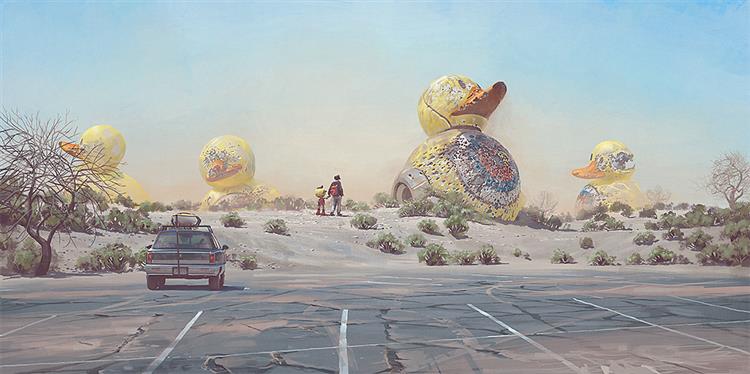
The art book is filled with beautifully haunting paintings of scenes encountered by the pair on their journey towards the west coast. It’s amazing how Stålenhag can make such mundane images of American highways, cars, ordinary buildings look so sad and creepy — even when monuments of high technology are injected in between. The masterful part is how the visuals and the text come together. Accompanied by the visuals, the narrative is a well-written, tragic character story. Everything that Michelle has already gone through, as told in flashbacks, is sad. But it also feels like her life was the norm and that the shiny plastic veneer of this society was easily scratched away. Despite the setup for a road trip adventure, the plot involves almost no action apart from driving from stop to stop. Stålenhag’s writing is excellent at evoking a mood of decay and abandonment, and he gives Michelle’s voice a feeling of weariness, even though she also feels determined against the backdrop of the rest of the world that has given up, dissipated and disappeared.
A challenge in reading this book is that it doesn’t really hold your hand. The writing is subtle about when the voice or timeframe has changed (though there are typographical cues — which makes me feel bad for the audiobook readers, and they’re also missing out on the visuals, which are the best part). Michelle’s narration often switches between past and present without warning. Plus, the backstory of this alternate world requires some puzzling together of various snapshots (along with visual clues from the illustrations). The book is never a sunny funny read, but it also stops short of being depressing. It stirs up all kinds of feelings, especially if the reader manages to engage with Michelle and Skip’s story (including the finale told only in images — which I confess I loved, but am not sure I understood completely). This is that kind of book. (4 out of 5)

The Movie
The Netflix film “adapting” Stålenhag’s book was so different from the source that I feel hard-pressed to refer to it as an adaptation. Netflix is obviously trying to spend money to make money (they hired MCU rainmakers, The Russo Brothers to direct after all). So, it was never going to be a faithful adaptation since the art book is something more suited to an independent film. In fact, it reminds me a little bit of a dystopian Nomadland (Why couldn’t they have hired Chloé Zhao to direct this movie instead of having her mess up the MCU’s Eternals. They could have even traded the Russo brothers back to Marvel and had them make the MCU great again! Win win! But I digress…)
So what’s different between the movie and the book? Practically everything. The story of a teenage runaway sister with her robot [spoiler alert] brother, trekking across a post-apocalyptic America is kind of true to the book (though in the movie, America is not really post-apocalyptic, but more of having been in a war with its own robots. Having defeated them, the robots are now abandoned in a kind of wasteland prison zone). The America of the movie has futuristic cities of prosperous humans (which we don’t really see in the book).
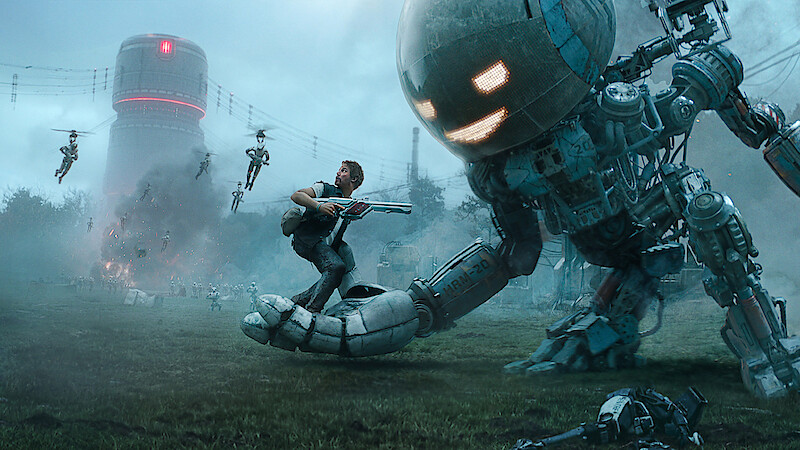
In the movie, we know from the start that the robot who brings Michelle on this trek is her brother. The technology central to both the movie and the book involves humans plugging their minds into a connected world and using machines as drone bodies. In the book it’s kind of a moving and emotional twist [sorry about the spoiler, but I know your likelihood of reading the book is low] but in the movie we meet the brother first as a person and later as a drone robot. It’s not much of a mystery or surprise.
The movie also makes the story all about a conflict between an evil tech billionaire vs the noble robots. This is not at all what the book is about. The difference is very obvious and ridiculous. The movie also introduces other main characters, including Chris Pratt’s black market items dealer, and his robot buddy, along with Ke Huy Quan as a rebel scientist. There is not even a hint of these characters; and they only serve to make the movie even more distant from the book.
I think all they wanted from the book was its aesthetic. This can be seen in a number of tableaus and images in the movie where we see unique elements taken directly from illustrations in the book, including a giant derelict robot sitting slumped over; huge novelty ducks showing actual battle damage, broken and abandoned; a person plugged into VR headgear passed out/dead at the side of the road; and an iconic image of the robot brother Christopher pulling a long inflatable kayak across the desert as he and Michelle make their way.
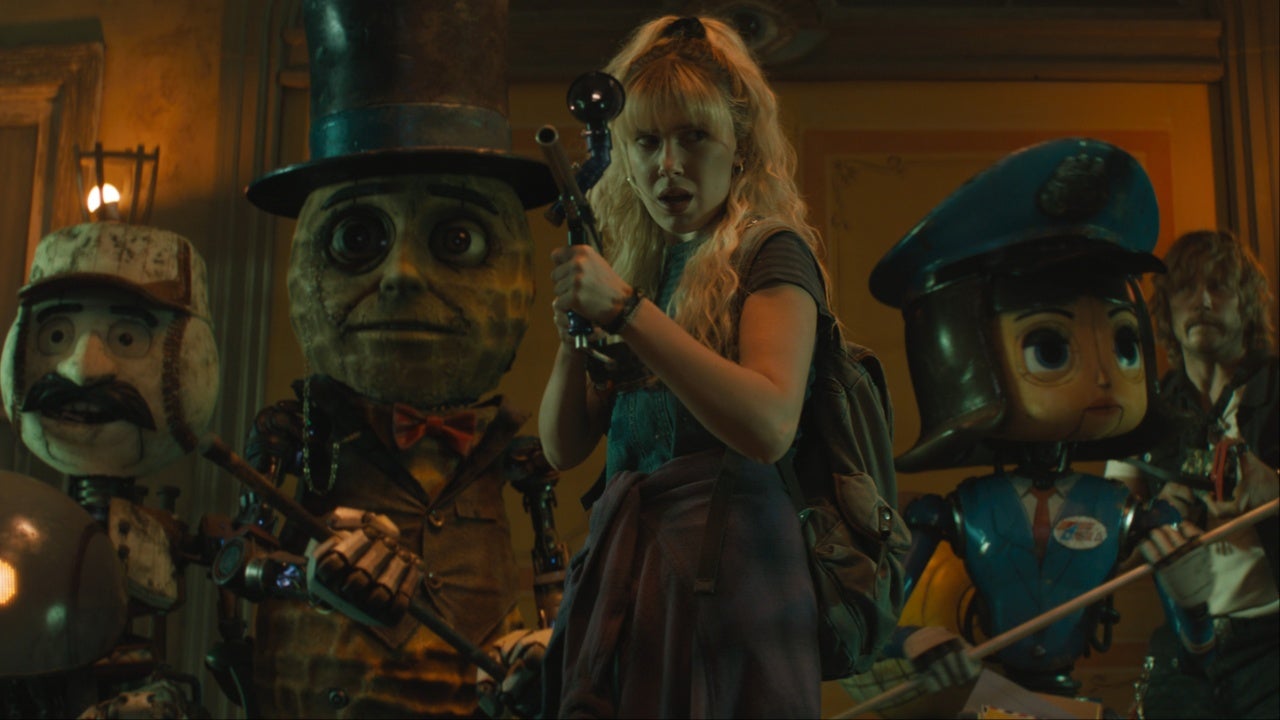
I know I’m not doing a good job of reviewing this movie, but frankly I have very little to say. The visual effects of the robots is not bad. The characters are very cartoonish (and that’s not even counting the robots based on cartoons like Mr. Peanut) and their only emotion seems to be sentimentality. The action scenes are also fine, but nothing spectacular (especially disappointing considering these directors brought us Avengers: Infinity War and Avengers: End Game). If you want to turn off your brain and watch something flashy for two hours, tune into this movie (you’d fit right in with those people in the headgear). (2.5 out of 5)
But if you want to be entranced by a dark, dystopian sci-fi fable with haunting and beautiful imagery, you’d be better off with the book.
Please join me on GoodReads and follow what I’m reading: https://www.goodreads.com/user/show/78985113-alvin-ng
Or join me on Fable: https://fable.co/alvin-ng-324926061648
 Alvin's Adventures in Pop Culture