This is the third Simon Stålenhag book I’ve experienced this year (and I’ve actually got one more on loan from the library, so another review should be coming soon). I’ve loved them all, but sadly, I got to these books out of order. This book should have been the first one (and I already read the sequel to this, Things From the Flood). But, that’s alright, because they are not really narratives; not even non-linear ones. They are mostly a series of amazing snapshots and stories of suburban life in a sci-fi-contaminated Sweden. Stålenhag’s narrators describe brief little episodes, often of precocious school-age kids, who discover scary and wondrous things in their schoolyards, neighbours’ backyards or other various places in the region where abandoned and derelict technology has influenced the environment. In this first book, we learn briefly of the particle accelerator facility nicknamed “The Loop” which operated for decades under this small Swedish town of Mälaröarna, and how it led to all kinds of technology and scientific advancements. After it was shut down and decommissioned, artifacts and well as other science-fictiony effects were left behind in a somewhat mundane way.
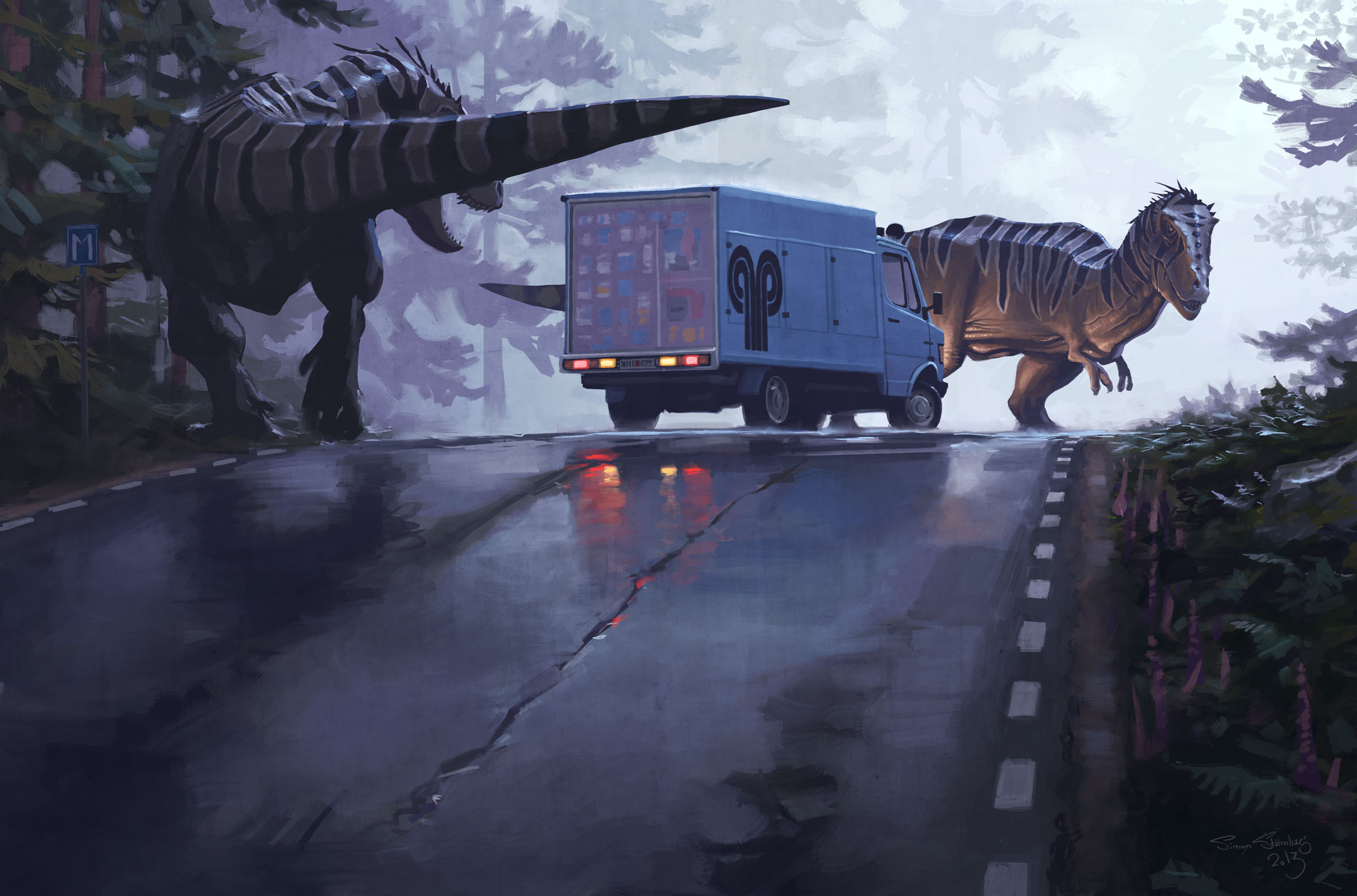
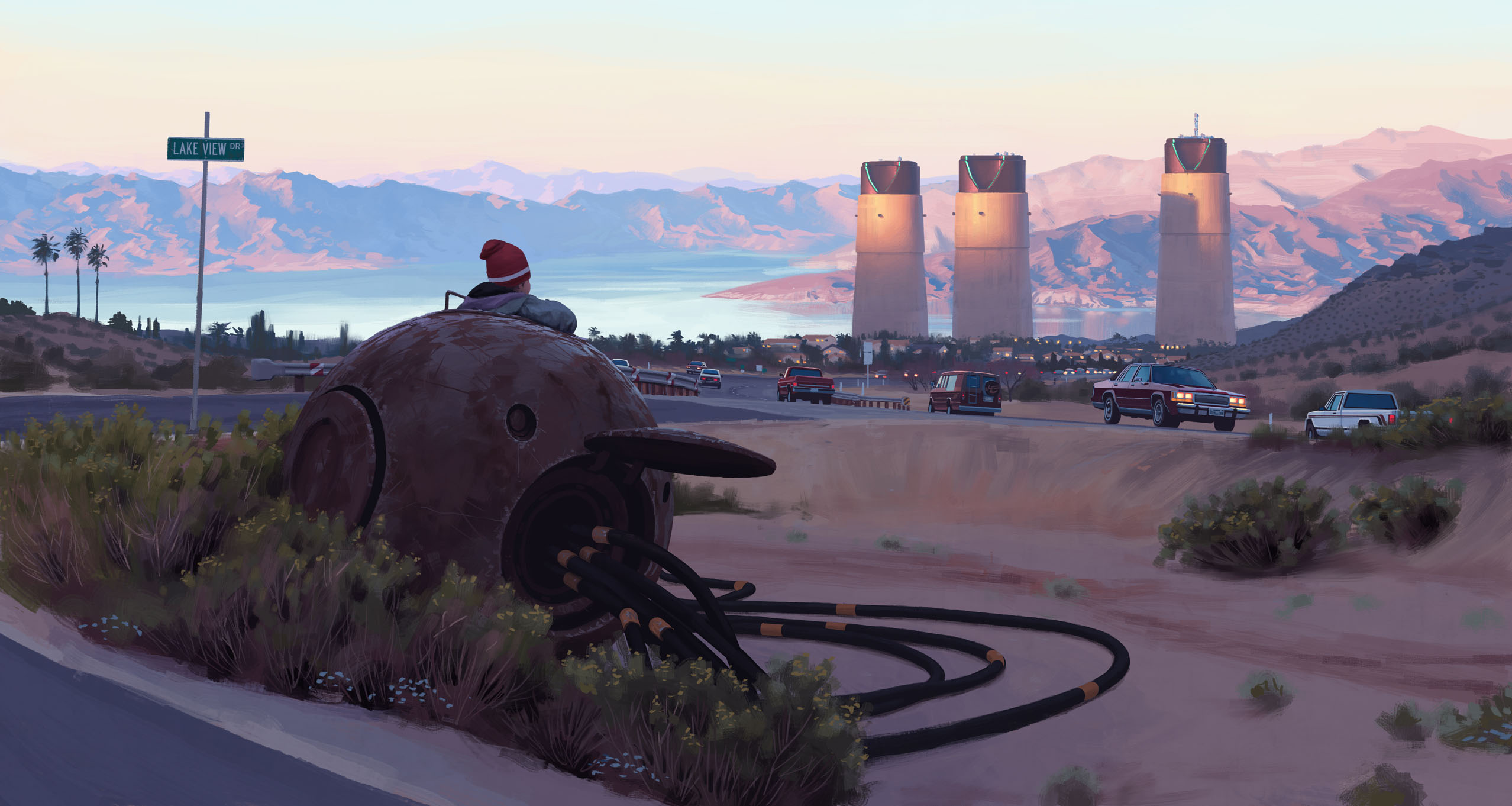
Specifically, there are metal spheres of various sizes abandoned in random places. According to the tales, these ecospheres may have causes a couple of twins to swap minds between their two bodies; and another kid claimed that after entering a sphere to retrieve a soccer ball, he was transported to another sphere in Nevada. As well, there are mag-lev vehicles, robots (both android types as well as larger construction “spider” robots) and even dinosaurs have apparently shown up through portals in space-time to terrorize the local ice cream trucks. Part of the charm of these books (and especially this one that started it all) is how all these sci-fi concepts are not explained with background info (though there was a segment in this book describing the made-up science behind the mag-lev vehicles used at the Loop) or with a storyline. These incredible things are all presented as neighbourhood gossip or plain ol’ ordinary happenings in the ‘burbs.
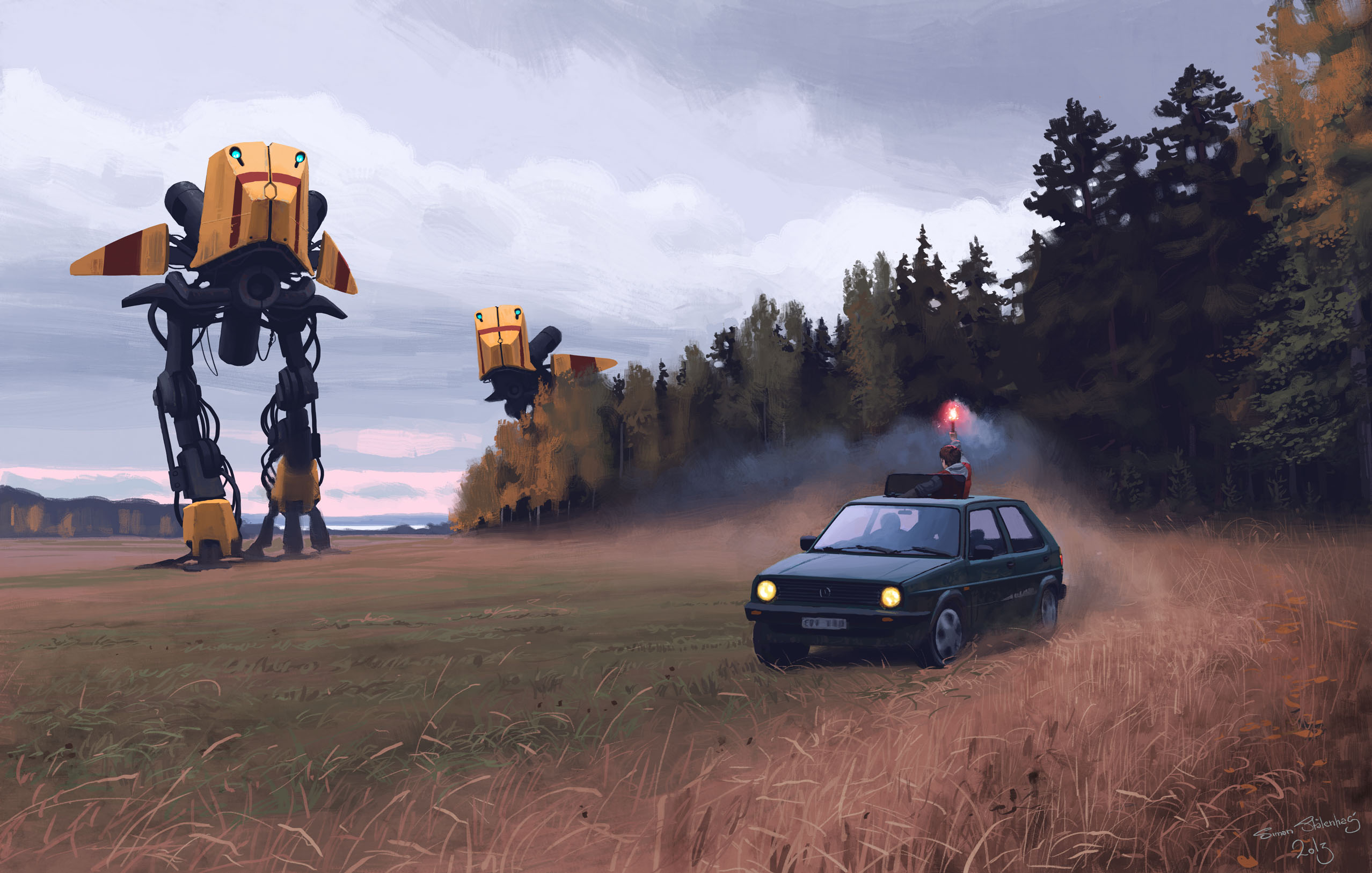
The second major aspect to these books are the amazing paintings, done by Stålenhag as well. Frankly, the reason why these books are so hard to get ahold of is because they are not cheap. They are essentially coffee table books with illustrations dominating the page count. The images are painted in a realistic style, in fact they reflect a kind of sci-fi variant of “magical realism”, where a couple of young kids might be playing with a two-legged robot in a rye field (controlling it remotely with a backpack). Or that aforementioned ice cream truck is abandoned on the road while two scarysauruses are sniffing around it. The paintings are beautiful and a little melancholic, but they also slip easily into the viewer’s mind so that you feel like not only can you imagine these really existing, but also that maybe you know what it’s like to live there. Unfortunately, because I was only able to borrow the audiobook version from the library, I didn’t have access to the images in the book (I know, why did I even bother, right?) Thankfully, Stålenhag shared almost all the images on his website, so I was able to follow along there. Plus, even though this book had more of a one-to-one correlation between the painted images and the stories in the text, the images are clearly meant only to provide quick, loose glimpses to help the reader realise this world in their minds. Not everything in the images are necessarily mentioned in the text. The images do, however, an incredible job of connecting the vibe.
That being said, the written text is also really a delight to read, with a bit of humour but also some heart. The stories are very short, but even so they describe very realistic characters (mostly a few kids) who are neither pure angels or bratty devils. But even that description from me is overstating it. There is a narrator, but there’s no protagonist or overall plot to this book. In the end, this is a well imagined world depicted mostly through atmosphere and some modest storytelling. This could be considered hard sci-fi, with really out-there concepts that are familiar to sci-fi fans. But it is told in such a plain, cozy and ordinary way (both through text and imagery) that you might also find yourself wondering if it’s really fiction at all. Surprisingly, I found part of my mind wondering if these scenes and the world of these books could have actually existed in the 1980s Sweden, at least until the other part reminds me that there’s no way that they could … but then again… That’s really the amazing effect of Stålenhag’s unique books and the subtle kind of wonder that they convey.
4.5 stars
P.S. I almost forgot to mention the TV series adaptation that started my obsession. Tales From the Loop was adapted by Amazon Prime Video. And while the show goes way beyond what’s in the book, that quiet and moody feel and the incredible yet subtle sci-fi is absolutely there. People should definitely check out the show (it’s a bit slow, but it’s worth it).
Please join me on GoodReads and follow what I’m reading: https://www.goodreads.com/user/show/78985113-alvin-ng
Or join me on Fable: https://fable.co/alvin-ng-324926061648

